Buy dingelstaedt.eu ?
We are moving the project
dingelstaedt.eu .
Are you interested in purchasing the domain
dingelstaedt.eu ?
domain@kv-gmbh.de · 0541-91531010
Buy dingelstaedt.eu ?
What is the difference between ionizing and non-ionizing radiation?
Ionizing radiation has enough energy to remove tightly bound electrons from atoms, creating ions. This type of radiation includes X-rays, gamma rays, and some forms of ultraviolet radiation. Non-ionizing radiation, on the other hand, does not have enough energy to remove electrons from atoms, and includes forms of radiation such as visible light, radio waves, and microwaves. The main difference between the two is the amount of energy they carry and their ability to ionize atoms. **
How can the intensity of non-ionizing radiation be determined?
The intensity of non-ionizing radiation can be determined using a variety of methods. One common method is to use a radiation detector or meter specifically designed to measure non-ionizing radiation, such as a radiofrequency (RF) meter for measuring electromagnetic fields. These meters can measure the strength of the radiation in terms of power density or electric and magnetic field strength. Another method is to use dosimeters, which are devices that can be worn by individuals to measure their personal exposure to non-ionizing radiation over a period of time. Additionally, computer simulations and modeling can be used to estimate the intensity of non-ionizing radiation in a given environment. **


Similar search terms for Non-ionizing
Top-Angebote
Products related to Non-ionizing:
-
24 Hours in Ancient History Series 5 Books Collection Set - Non Fiction - Paperback Michael O'Mara Books LtdTitles in this Set: 1. 24 Hours in Ancient Rome 2. 24 Hours in Ancient Egypt 3. 24 Hours in Ancient Athens 4. 24 Hours in Ancient China 5. 24 Hours in the Viking World Description: 24 Hours in Ancient Rome Walk a day in a Roman’s sandals ... What was it like to live in one of the ancient world’s most powerful and bustling cities – one that was eight times more densely populated than modern day New York? In this entertaining and enlightening guide, bestselling historian Philip Matyszak introduces us to 24 characters who lived and worked there. In each hour of the day we meet a new character – from a senator to a slave girl, a gladiator to an astrologer, watchmen to washerwomen – and discover the fascinating details of their daily lives. 24 Hours in Ancient Egypt Spend 24 hours with the inhabitants of the most powerful kingdom in the ancient world. Ancient Egypt wasn’t all pyramids, sphinxes and gold sarcophagi. For your average Egyptian, life was tough, and work was hard, conducted under the burning gaze of the sun god Ra. During the course of a day in the ancient city of Thebes (modern-day Luxor), Egypt’s religious capital, we meet 24 Egyptians from all strata of society – from the king to the bread-maker, the priestess to the fisherman, the soldier to the midwife – and get to know what the real Egypt was like by spending an hour in their company. We encounter a different one of these characters every hour and in every chapter, and through their eyes see what an average day in ancient Egypt was really like. 24 Hours in Ancient Athens Spend 24 hours with the ancient Athenians. See the city through their eyes as it teeters on the edge of the fateful war that would end its golden age. Athens, 416 BC. A tenuous peace holds. The city-state’s political and military might are feared throughout the ancient world; it pushes the boundaries of social, literary and philosophical experimentation in an era when it has a greater concentration of geniuses per capita than at any other time in human history. Yet even geniuses go to the bathroom, argue with their spouse and enjoy a drink with friends. During the course of a day we meet 24 Athenians from all strata of society – from the slave-girl to the councilman, the vase painter to the naval commander, the housewife to the hoplite – and get to know what the real Athens was like by spending an hour in their company. We encounter a different one of these characters every chapter, with each chapter forming an hour in the life of the ancient city. We also get to spy on the daily doings of notable Athenians through the eyes of regular people as the city hovers on the brink of the fateful war that will destroy its golden age. 24 Hours in Ancient China Spend 24 hours with the ancient Chinese. The year is AD 17. The Han dynasty is in power and we are in and around Chang’an, the capital and one of the most developed regions of the empire, which is enjoying a prolonged economic and cultural pinnacle. There are...29,99 £*Shipping: 2,99 £Secure redirect to the provider
-
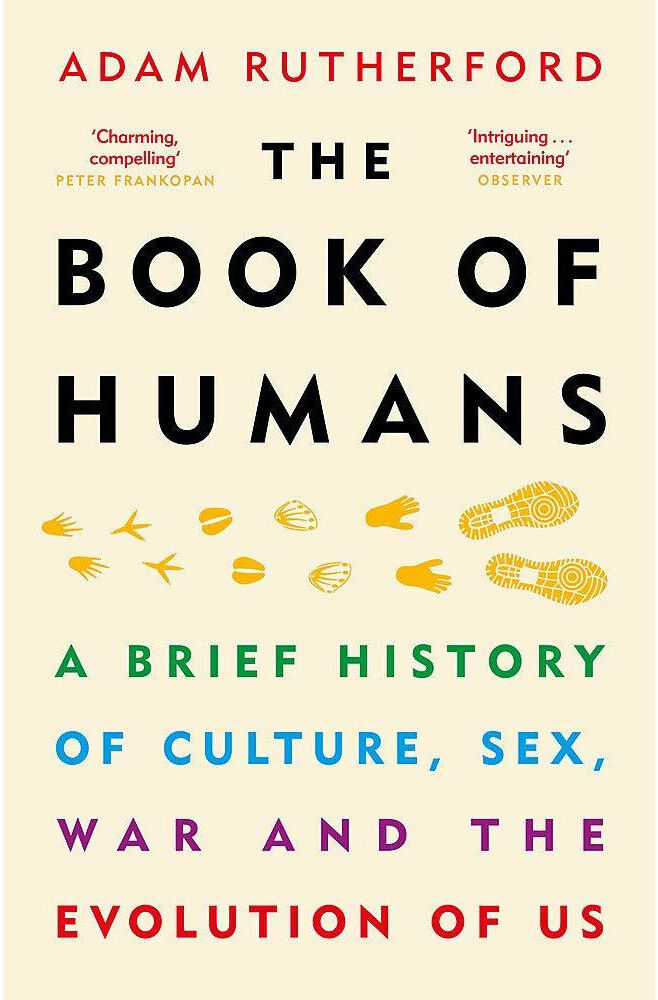
Orion The Book of Humans by Adam Rutherford – A Brief History of Culture, Sex, War & EvolutionWHAT MAKES US HUMAN? Waging war? Sex for pleasure? Creating art? Mastery of fire? In this thrilling tour of the animal kingdom, Adam Rutherford tells the story of how we became the unique creatures we are today. Illuminated by the latest scientific discoveries, THE BOOK OF HUMANS is a dazzling compendium of what unequivocally fixes us as animals, and reveals how we are extraordinary among them.4,98 £*Shipping: 1,99 £Secure redirect to the provider
-
Godzilla: The First 70 Years By Steve Ryfle and Ed Godziszewski: The Official Illustrated History of the Japanese Productions - Non Fiction - Hardback AbramsAn epic celebration of Godzilla’s 70th anniversary, exploring every aspect of the creation, design, and evolution of King of the Monsters in Toho Studios' films and TV series from 1954 to the present. Godzilla: The First 70 Years is a narrative and visual history of Japan’s King of the Monsters, chronicling the triumphs, challenges, and meaning of seven decades of city-trashing, kaiju-smashing mayhem. It's also a tribute to Godzilla’s creators and costars—the filmmakers, special-effects wizards, cast members, even the stuntmen inside the monster suit—and an appreciation of the behind-the-scenes artistry involved in bringing Godzilla to cinematic life, then and now. Extensive visuals detail the evolution of kaiju design, as well as profile the creative contribution and SFX developments across seven decades of exceptional filmmaking and innovation.34,99 £*Shipping: 2,99 £Secure redirect to the provider
-
RLF Home Tradition Provance Valance"Fits Windows up to 50""W. Use multiples for Wider Windows. Decorator's quality fabrics. Fully lined with Poly/Cotton Ivory lining. Use a 2-1/2"" Continental Rod, a regular 3/4"" Curtain rod, Tension rod or Decorative pole no more than 1-3/8"" Diameter."64,49 $*Shipping: 0,00 $Secure redirect to the provider



-
Who discovered ionizing radiation?
Ionizing radiation was discovered by Wilhelm Conrad Roentgen in 1895. While experimenting with cathode rays, he noticed that a fluorescent screen in his lab would glow even when it was not directly in the path of the rays. This led him to the discovery of X-rays, which are a form of ionizing radiation. Roentgen's discovery revolutionized the field of medicine and earned him the first Nobel Prize in Physics in 1901. **
-
What professions involve working with ionizing radiation?
Professions that involve working with ionizing radiation include radiologic technologists, nuclear medicine technologists, radiation therapists, and radiologists. These professionals use ionizing radiation in various medical imaging and treatment procedures. Other professions that may involve working with ionizing radiation include nuclear engineers, physicists, and researchers in the field of nuclear energy. **
-
When and why does ionizing radiation occur?
Ionizing radiation occurs when an atom undergoes a process that causes it to lose or gain electrons, resulting in the formation of charged particles called ions. This can happen through natural processes such as radioactive decay of certain elements, or through human activities such as medical imaging and nuclear power generation. Ionizing radiation is harmful to living organisms because it can damage cells and DNA, leading to potential health risks such as cancer and genetic mutations. **
-
When do different types of ionizing radiation occur?
Different types of ionizing radiation occur in various situations. For example, alpha radiation occurs during the decay of heavy elements such as uranium or radium. Beta radiation occurs during the decay of certain unstable isotopes, while gamma radiation is emitted during nuclear reactions and radioactive decay. X-rays are produced during high-energy processes such as in medical imaging or industrial applications. Each type of ionizing radiation has its own specific source and characteristics. **
Does beta-plus radiation belong to ionizing radiation?
Yes, beta-plus radiation belongs to ionizing radiation. Beta-plus radiation consists of positrons, which are positively charged particles that have the ability to ionize atoms by knocking off electrons from their orbits. This process can lead to the formation of charged particles and free radicals, which can cause damage to biological tissues and DNA. Therefore, beta-plus radiation is considered a form of ionizing radiation due to its ability to ionize atoms and cause biological damage. **
What professions are there that deal with ionizing radiation?
Professions that deal with ionizing radiation include radiologic technologists, radiation therapists, nuclear medicine technologists, radiologists, medical physicists, and nuclear engineers. These professionals work in various settings such as hospitals, diagnostic imaging centers, research facilities, and nuclear power plants. They are trained to safely handle and use ionizing radiation for medical diagnosis and treatment, as well as for industrial and energy production purposes. **
Top-Angebote
Products related to Non-ionizing:
-
From the Archives: Black History and Culture Value PackThis brand-new series is rooted in a profound commitment to shedding light on some of the important -- and often lesser-known -- aspects of Black history. From the Archives features landmarks, events, people, and artistic endeavors that have played...26,99 $*Shipping: 0,00 $Secure redirect to the provider
-
The Black History Month Bundle 4 Books Collection Set - Fiction/Non Fiction - Paperback Books2DoorThis Black History Month, we’re excited to expand our Black Voices collection with a specially curated set for you, our beloved readers! We believe it’s essential to amplify Black voices and ensure they are heard loud and clear. To start, we’re offering a selection of books that span contemporary perspectives to historical insights. Start with Queenie, a modern classic that resonates with today’s audience, exploring the complexities of identity and belonging. Then, dive into Black and British, an essential non-fiction work that highlights the importance of understanding our history through the lens of Black voices, stories that must be shared and celebrated. We also have some beloved favourites to enrich your reading experience. The Color Purple is a powerful tale of resilience and empowerment that continues to inspire readers. Plus, don’t miss Keep the Receipts by The Receipts Media Ltd, a popular non-fiction book from our favourite podcasters that offers fresh perspectives and engaging conversations. Let’s celebrate Black voices together this month and beyond! Titles in this set: 1. The Color Purple: by Alice Walker (Fiction) 2. Queenie: by Candice Carty-Williams (Fiction) 3. Black and British: A Forgotten History: by David Olusoga (Non-Fiction) 4. Keep the Receipts: by The Receipts Media Ltd (Non-Fiction) Description: The Color Purple Set in the deep American South between the wars, THE COLOR PURPLE is the classic tale of Celie, a young black girl born into poverty and segregation. Raped repeatedly by the man she calls 'father', she has two children taken away from her, is separated from her beloved sister Nettie and is trapped into an ugly marriage. But then she meets the glamorous Shug Avery, singer and magic-maker - a woman who has taken charge of her own destiny. Gradually Celie discovers the power and joy of her own spirit, freeing her from her past and reuniting her with those she loves. Queenie Queenie is a twenty-five-year-old Black woman living in south London, straddling Jamaican and British culture whilst slotting neatly into neither. She works at a national newspaper where she's constantly forced to compare herself to her white, middle-class peers, and beg to write about Black Lives Matter. After a messy break up from her long-term white boyfriend, Queenie finds herself seeking comfort in all the wrong places. As Queenie veers from one regrettable decision to another, she finds herself wondering, What are you doing? Why are you doing it? Who do you want to be? - the questions that every woman today must face in a world that keeps trying to provide the answers for them. A darkly comic and bitingly subversive take on life, love, race and family, Queenie will have you nodding in recognition, crying in solidarity and rooting for this unforgettable character every step of the way. A disarmingly honest, boldly political and truly inclusive tale that will speak to anyone who has gone looking for love and acceptance and found something...26,99 £*Shipping: 2,99 £Secure redirect to the provider
-
24 Hours in Ancient History Series 5 Books Collection Set - Non Fiction - Paperback Michael O'Mara Books LtdTitles in this Set: 1. 24 Hours in Ancient Rome 2. 24 Hours in Ancient Egypt 3. 24 Hours in Ancient Athens 4. 24 Hours in Ancient China 5. 24 Hours in the Viking World Description: 24 Hours in Ancient Rome Walk a day in a Roman’s sandals ... What was it like to live in one of the ancient world’s most powerful and bustling cities – one that was eight times more densely populated than modern day New York? In this entertaining and enlightening guide, bestselling historian Philip Matyszak introduces us to 24 characters who lived and worked there. In each hour of the day we meet a new character – from a senator to a slave girl, a gladiator to an astrologer, watchmen to washerwomen – and discover the fascinating details of their daily lives. 24 Hours in Ancient Egypt Spend 24 hours with the inhabitants of the most powerful kingdom in the ancient world. Ancient Egypt wasn’t all pyramids, sphinxes and gold sarcophagi. For your average Egyptian, life was tough, and work was hard, conducted under the burning gaze of the sun god Ra. During the course of a day in the ancient city of Thebes (modern-day Luxor), Egypt’s religious capital, we meet 24 Egyptians from all strata of society – from the king to the bread-maker, the priestess to the fisherman, the soldier to the midwife – and get to know what the real Egypt was like by spending an hour in their company. We encounter a different one of these characters every hour and in every chapter, and through their eyes see what an average day in ancient Egypt was really like. 24 Hours in Ancient Athens Spend 24 hours with the ancient Athenians. See the city through their eyes as it teeters on the edge of the fateful war that would end its golden age. Athens, 416 BC. A tenuous peace holds. The city-state’s political and military might are feared throughout the ancient world; it pushes the boundaries of social, literary and philosophical experimentation in an era when it has a greater concentration of geniuses per capita than at any other time in human history. Yet even geniuses go to the bathroom, argue with their spouse and enjoy a drink with friends. During the course of a day we meet 24 Athenians from all strata of society – from the slave-girl to the councilman, the vase painter to the naval commander, the housewife to the hoplite – and get to know what the real Athens was like by spending an hour in their company. We encounter a different one of these characters every chapter, with each chapter forming an hour in the life of the ancient city. We also get to spy on the daily doings of notable Athenians through the eyes of regular people as the city hovers on the brink of the fateful war that will destroy its golden age. 24 Hours in Ancient China Spend 24 hours with the ancient Chinese. The year is AD 17. The Han dynasty is in power and we are in and around Chang’an, the capital and one of the most developed regions of the empire, which is enjoying a prolonged economic and cultural pinnacle. There are...29,99 £*Shipping: 2,99 £Secure redirect to the provider
-
Orion The Book of Humans by Adam Rutherford – A Brief History of Culture, Sex, War & EvolutionWHAT MAKES US HUMAN? Waging war? Sex for pleasure? Creating art? Mastery of fire? In this thrilling tour of the animal kingdom, Adam Rutherford tells the story of how we became the unique creatures we are today. Illuminated by the latest scientific discoveries, THE BOOK OF HUMANS is a dazzling compendium of what unequivocally fixes us as animals, and reveals how we are extraordinary among them.4,98 £*Shipping: 1,99 £Secure redirect to the provider
-
What is the difference between ionizing and non-ionizing radiation?
Ionizing radiation has enough energy to remove tightly bound electrons from atoms, creating ions. This type of radiation includes X-rays, gamma rays, and some forms of ultraviolet radiation. Non-ionizing radiation, on the other hand, does not have enough energy to remove electrons from atoms, and includes forms of radiation such as visible light, radio waves, and microwaves. The main difference between the two is the amount of energy they carry and their ability to ionize atoms. **
-
How can the intensity of non-ionizing radiation be determined?
The intensity of non-ionizing radiation can be determined using a variety of methods. One common method is to use a radiation detector or meter specifically designed to measure non-ionizing radiation, such as a radiofrequency (RF) meter for measuring electromagnetic fields. These meters can measure the strength of the radiation in terms of power density or electric and magnetic field strength. Another method is to use dosimeters, which are devices that can be worn by individuals to measure their personal exposure to non-ionizing radiation over a period of time. Additionally, computer simulations and modeling can be used to estimate the intensity of non-ionizing radiation in a given environment. **
-
Who discovered ionizing radiation?
Ionizing radiation was discovered by Wilhelm Conrad Roentgen in 1895. While experimenting with cathode rays, he noticed that a fluorescent screen in his lab would glow even when it was not directly in the path of the rays. This led him to the discovery of X-rays, which are a form of ionizing radiation. Roentgen's discovery revolutionized the field of medicine and earned him the first Nobel Prize in Physics in 1901. **
-
What professions involve working with ionizing radiation?
Professions that involve working with ionizing radiation include radiologic technologists, nuclear medicine technologists, radiation therapists, and radiologists. These professionals use ionizing radiation in various medical imaging and treatment procedures. Other professions that may involve working with ionizing radiation include nuclear engineers, physicists, and researchers in the field of nuclear energy. **
Similar search terms for Non-ionizing
-
Godzilla: The First 70 Years By Steve Ryfle and Ed Godziszewski: The Official Illustrated History of the Japanese Productions - Non Fiction - Hardback AbramsAn epic celebration of Godzilla’s 70th anniversary, exploring every aspect of the creation, design, and evolution of King of the Monsters in Toho Studios' films and TV series from 1954 to the present. Godzilla: The First 70 Years is a narrative and visual history of Japan’s King of the Monsters, chronicling the triumphs, challenges, and meaning of seven decades of city-trashing, kaiju-smashing mayhem. It's also a tribute to Godzilla’s creators and costars—the filmmakers, special-effects wizards, cast members, even the stuntmen inside the monster suit—and an appreciation of the behind-the-scenes artistry involved in bringing Godzilla to cinematic life, then and now. Extensive visuals detail the evolution of kaiju design, as well as profile the creative contribution and SFX developments across seven decades of exceptional filmmaking and innovation.34,99 £*Shipping: 2,99 £Secure redirect to the provider
-
RLF Home Tradition Provance Valance"Fits Windows up to 50""W. Use multiples for Wider Windows. Decorator's quality fabrics. Fully lined with Poly/Cotton Ivory lining. Use a 2-1/2"" Continental Rod, a regular 3/4"" Curtain rod, Tension rod or Decorative pole no more than 1-3/8"" Diameter."64,49 $*Shipping: 0,00 $Secure redirect to the provider
-
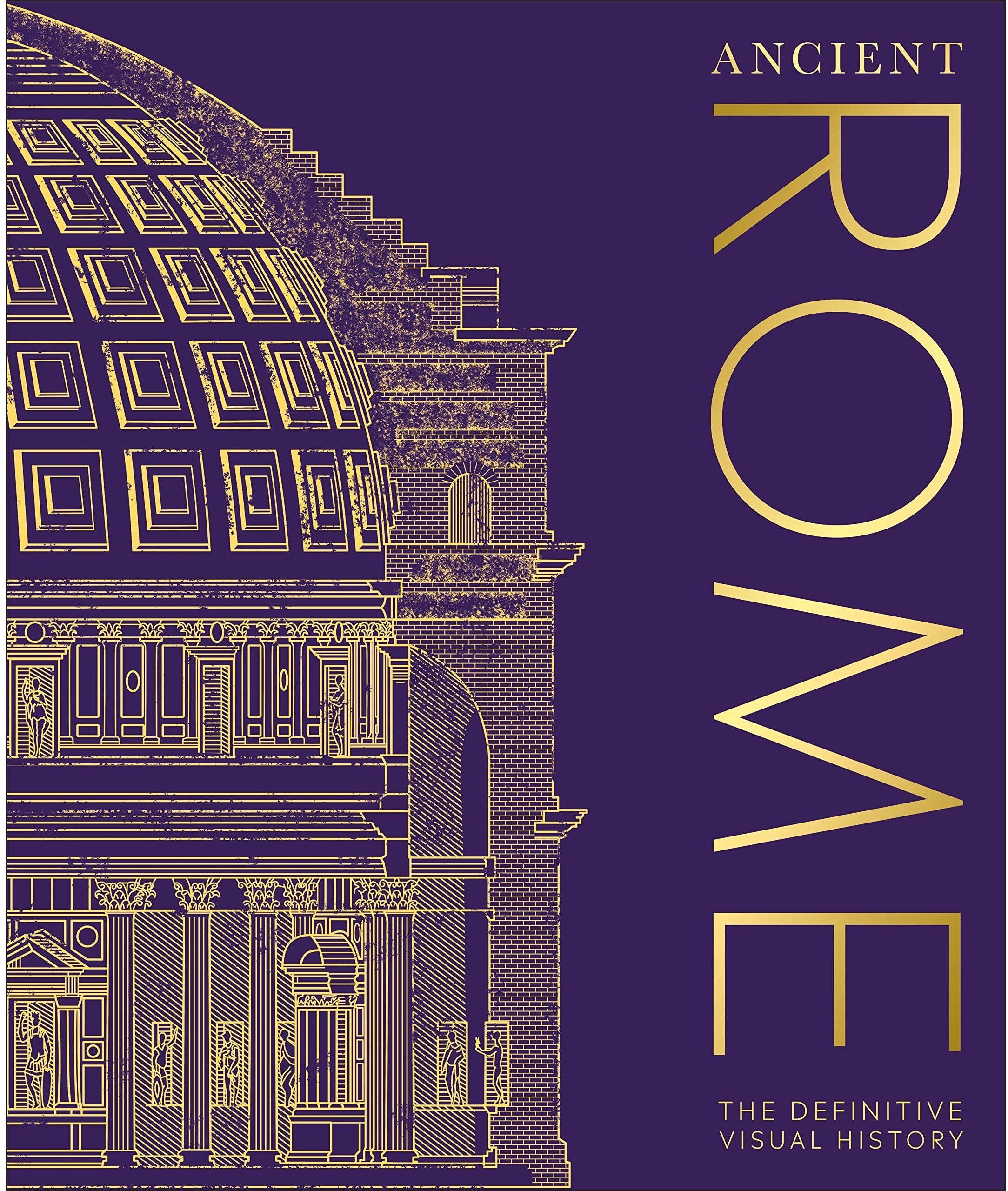
Ancient Rome: The Definitive Visual History (DK Classic History)Immerse yourself in the history of ancient Rome - from its origins as a small settlement on the Palatine Hill to its peak as an empire reigning over 90 million people, and its tumultuous decline. Covering more than 1,000 years of history, and an empire that stretched from Scotland to Syria, Ancient Rome reveals in vivid detail all of the key political, cultural, and military events that shaped the Roman Empire and explores what it was like to live in a society that laid the foundations for many aspects of the modern world. Sumptuous photography and engaging text cover every facet of life in ancient Rome, from art, entertainment, and fashion to engineering, medicine, and war, while detailed maps trace the rise of the mighty Roman Empire. Step back in time in the pages of this history book to discover:- Themed spreads explore developments in areas such as sculpture, religion, warfare, and engineering. - Includes tales of the most dramatic events and battles in Roman history, as well as profiles of influential historical and cultural figures. - An optional 80pp reference section includes sections on rulers, gods and goddesses, and key sites. Featuring Rome's greatest emperors, from Augustus to Constantine, as well as profiles of generals, historians, and influential women, Ancient Rome also delves into the fascinating stories of gladiators, bakers, and enslaved people. The most iconic buildings of Rome are brought to life with specially commissioned CGI recreations, while the stories of ordinary citizens, soldiers, and persecuted groups from across the empire are told with the help of illustrations, artefacts, and eyewitness accounts. Beautifully illustrated and unparalleled in scope, Ancient Rome is the perfect book for anyone who is interested in this defining period of world history.19,95 £*Shipping: 2,99 £Secure redirect to the provider
-
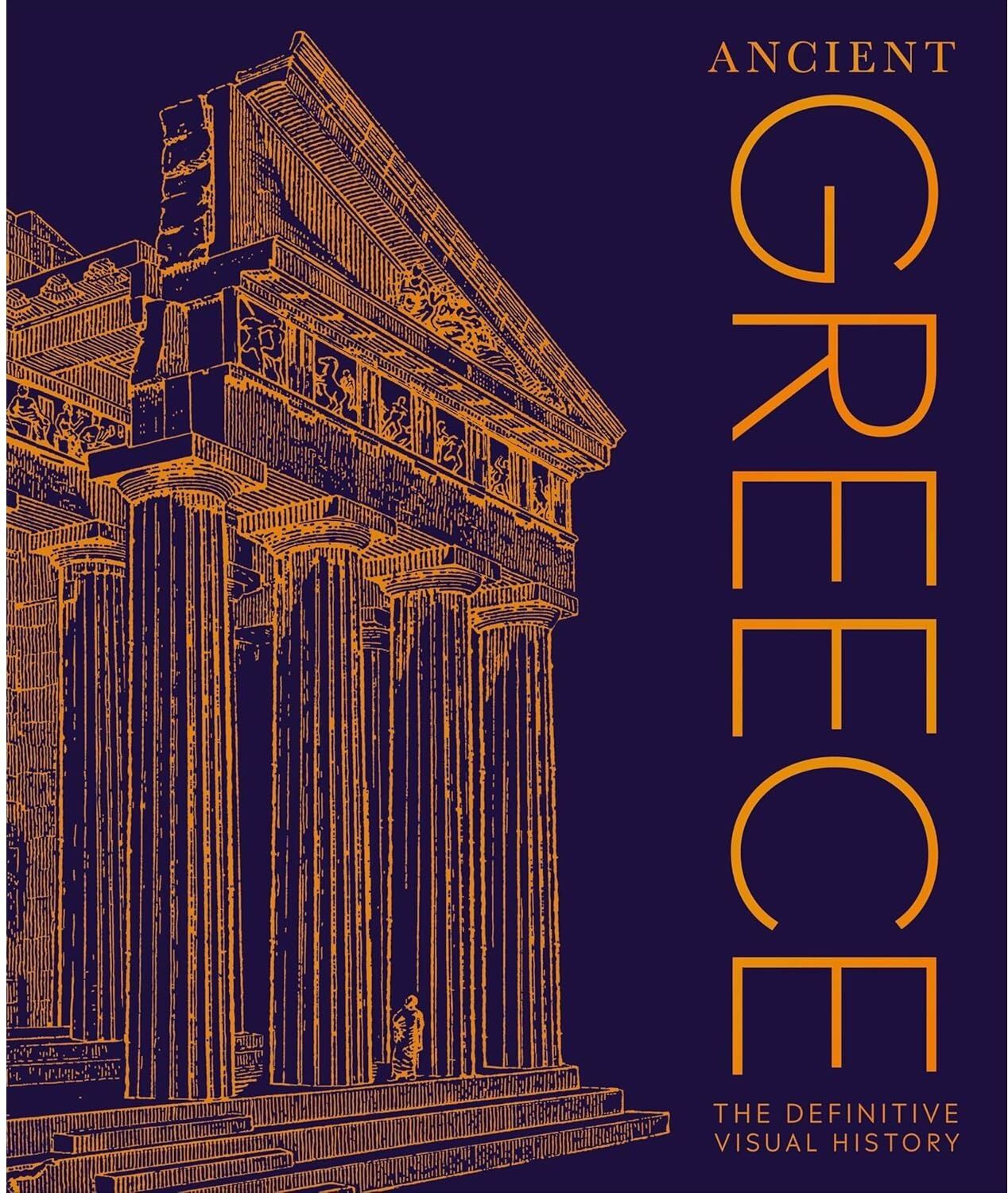
Ancient Greece: The Definitive Visual History (DK Classic History)Embark upon a fascinating journey through ancient Greece – from its rise and fall to its lasting legacy throughout the Western world. Spanning more than 3,000 years, Ancient Greece explores the tumultuous history of this glorious empire in vivid detail – from its Minoan and Mycenaean origins to the apogee of the warring city-states of Athens and Sparta, and from the death of its most charismatic leader, Alexander the Great, to its ultimate defeat by Rome. Sumptuous photography and authoritative, engaging text cover every facet of life in ancient Greece, from art, entertainment, and schools of thought to politics, medicine, and war, while the myths and religious beliefs of the ancient culture are explored and explained in depth. Greece’s military and political power shines through in fascinating maps of its legendary battles. Buried palaces and the Athenian Agora where Plato and Socrates discussed philosophy are brought back to life with stunning CGI artworks. And the stories of everyone from ordinary citizens to lawmakers and the first Olympic athletes are retold through eyewitness accounts and original artefacts.19,99 £*Shipping: 2,99 £Secure redirect to the provider
-
When and why does ionizing radiation occur?
Ionizing radiation occurs when an atom undergoes a process that causes it to lose or gain electrons, resulting in the formation of charged particles called ions. This can happen through natural processes such as radioactive decay of certain elements, or through human activities such as medical imaging and nuclear power generation. Ionizing radiation is harmful to living organisms because it can damage cells and DNA, leading to potential health risks such as cancer and genetic mutations. **
-
When do different types of ionizing radiation occur?
Different types of ionizing radiation occur in various situations. For example, alpha radiation occurs during the decay of heavy elements such as uranium or radium. Beta radiation occurs during the decay of certain unstable isotopes, while gamma radiation is emitted during nuclear reactions and radioactive decay. X-rays are produced during high-energy processes such as in medical imaging or industrial applications. Each type of ionizing radiation has its own specific source and characteristics. **
-
Does beta-plus radiation belong to ionizing radiation?
Yes, beta-plus radiation belongs to ionizing radiation. Beta-plus radiation consists of positrons, which are positively charged particles that have the ability to ionize atoms by knocking off electrons from their orbits. This process can lead to the formation of charged particles and free radicals, which can cause damage to biological tissues and DNA. Therefore, beta-plus radiation is considered a form of ionizing radiation due to its ability to ionize atoms and cause biological damage. **
-
What professions are there that deal with ionizing radiation?
Professions that deal with ionizing radiation include radiologic technologists, radiation therapists, nuclear medicine technologists, radiologists, medical physicists, and nuclear engineers. These professionals work in various settings such as hospitals, diagnostic imaging centers, research facilities, and nuclear power plants. They are trained to safely handle and use ionizing radiation for medical diagnosis and treatment, as well as for industrial and energy production purposes. **
* All prices are inclusive of VAT and, if applicable, plus shipping costs. The offer information is based on the details provided by the respective shop and is updated through automated processes. Real-time updates do not occur, so deviations can occur in individual cases. ** Note: Parts of this content were created by AI.