Buy dingelstaedt.eu ?
We are moving the project
dingelstaedt.eu .
Are you interested in purchasing the domain
dingelstaedt.eu ?
domain@kv-gmbh.de · 0541-91531010
Buy dingelstaedt.eu ?
What is grammatically correct: Cogito ergo sum or Ego cogito ergo sum?
The grammatically correct phrase is "Cogito ergo sum." This is the original Latin phrase coined by philosopher René Descartes, which translates to "I think, therefore I am." The phrase emphasizes the primacy of thought and self-awareness in establishing one's existence. **
What was Nietzsche's objection to Cogito ergo sum?
Nietzsche's objection to Cogito ergo sum, or "I think, therefore I am," stems from his belief that the self is not a fixed entity but rather a fluid and ever-changing construct. He argued that the idea of a stable and unified self, as implied by Descartes' statement, is an illusion. Nietzsche believed that the self is a product of various conflicting forces and influences, and that there is no essential core or unchanging identity to be found within it. Therefore, he rejected the notion that one's existence can be proven simply through the act of thinking. **

Similar search terms for Cogito
Top-Angebote
Products related to Cogito:
-
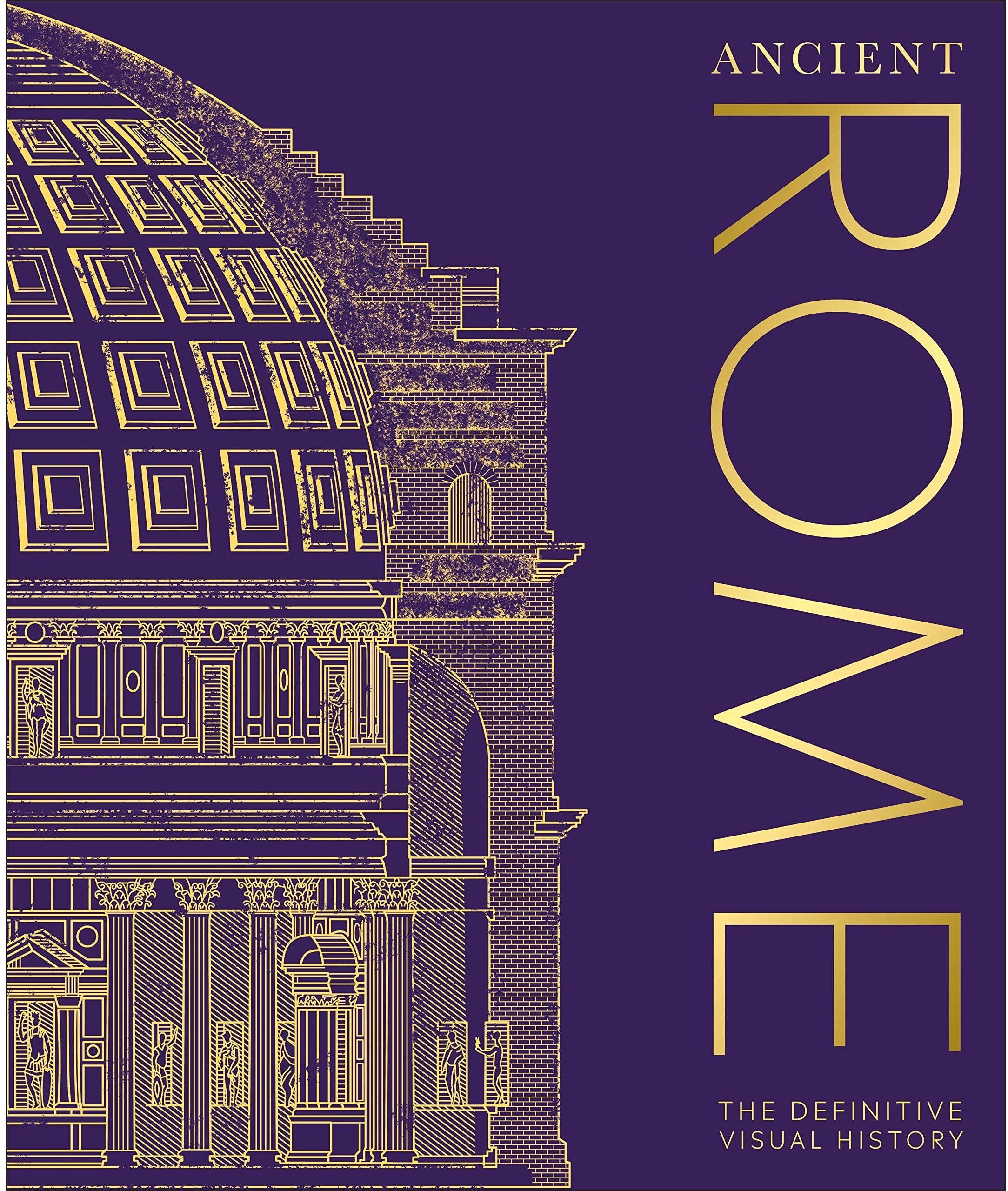
Ancient Rome: The Definitive Visual History (DK Classic History)Immerse yourself in the history of ancient Rome - from its origins as a small settlement on the Palatine Hill to its peak as an empire reigning over 90 million people, and its tumultuous decline. Covering more than 1,000 years of history, and an empire that stretched from Scotland to Syria, Ancient Rome reveals in vivid detail all of the key political, cultural, and military events that shaped the Roman Empire and explores what it was like to live in a society that laid the foundations for many aspects of the modern world. Sumptuous photography and engaging text cover every facet of life in ancient Rome, from art, entertainment, and fashion to engineering, medicine, and war, while detailed maps trace the rise of the mighty Roman Empire. Step back in time in the pages of this history book to discover:- Themed spreads explore developments in areas such as sculpture, religion, warfare, and engineering. - Includes tales of the most dramatic events and battles in Roman history, as well as profiles of influential historical and cultural figures. - An optional 80pp reference section includes sections on rulers, gods and goddesses, and key sites. Featuring Rome's greatest emperors, from Augustus to Constantine, as well as profiles of generals, historians, and influential women, Ancient Rome also delves into the fascinating stories of gladiators, bakers, and enslaved people. The most iconic buildings of Rome are brought to life with specially commissioned CGI recreations, while the stories of ordinary citizens, soldiers, and persecuted groups from across the empire are told with the help of illustrations, artefacts, and eyewitness accounts. Beautifully illustrated and unparalleled in scope, Ancient Rome is the perfect book for anyone who is interested in this defining period of world history.19,95 £*Shipping: 2,99 £Secure redirect to the provider
-
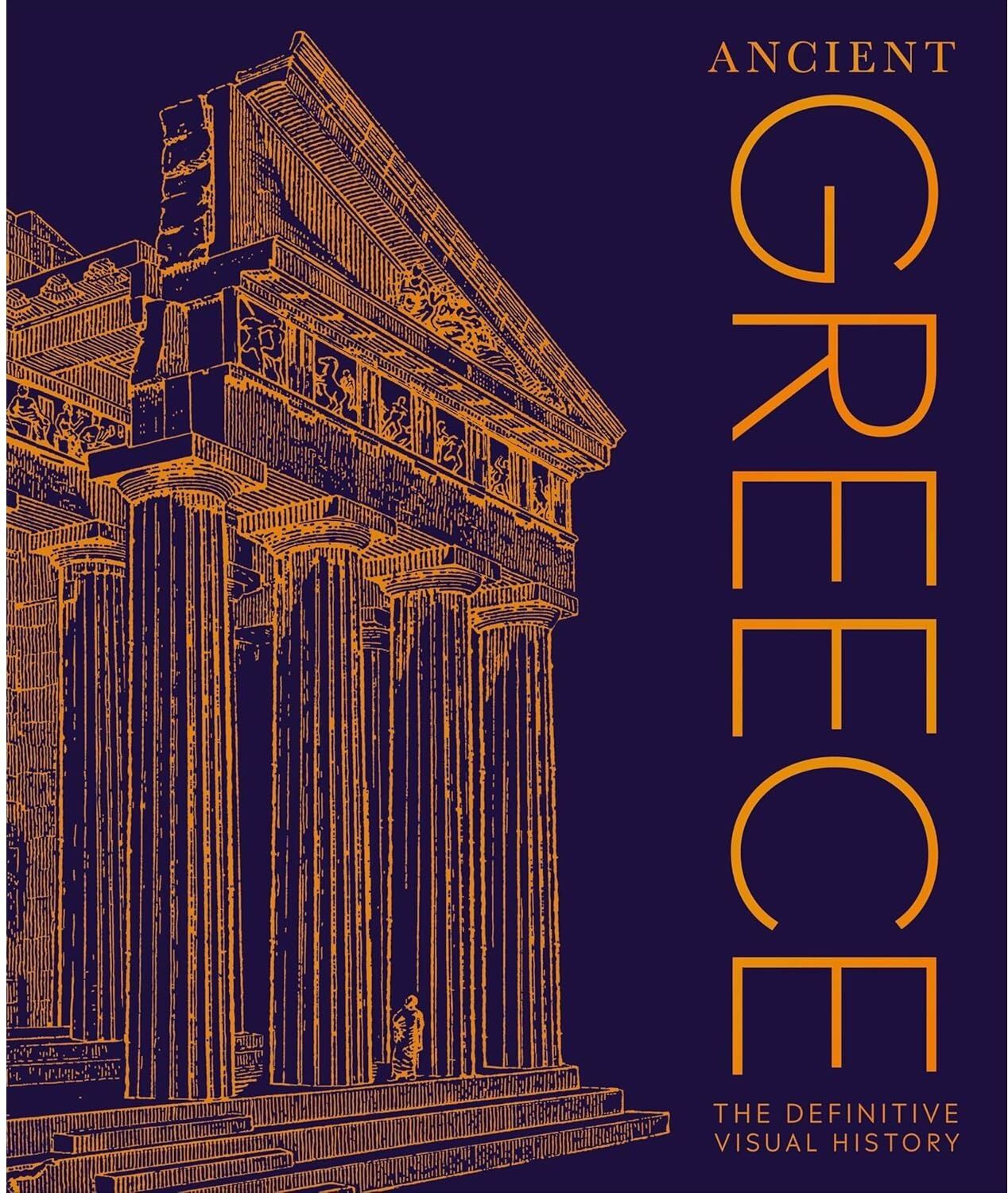
Ancient Greece: The Definitive Visual History (DK Classic History)Embark upon a fascinating journey through ancient Greece – from its rise and fall to its lasting legacy throughout the Western world. Spanning more than 3,000 years, Ancient Greece explores the tumultuous history of this glorious empire in vivid detail – from its Minoan and Mycenaean origins to the apogee of the warring city-states of Athens and Sparta, and from the death of its most charismatic leader, Alexander the Great, to its ultimate defeat by Rome. Sumptuous photography and authoritative, engaging text cover every facet of life in ancient Greece, from art, entertainment, and schools of thought to politics, medicine, and war, while the myths and religious beliefs of the ancient culture are explored and explained in depth. Greece’s military and political power shines through in fascinating maps of its legendary battles. Buried palaces and the Athenian Agora where Plato and Socrates discussed philosophy are brought back to life with stunning CGI artworks. And the stories of everyone from ordinary citizens to lawmakers and the first Olympic athletes are retold through eyewitness accounts and original artefacts.19,99 £*Shipping: 2,99 £Secure redirect to the provider
-
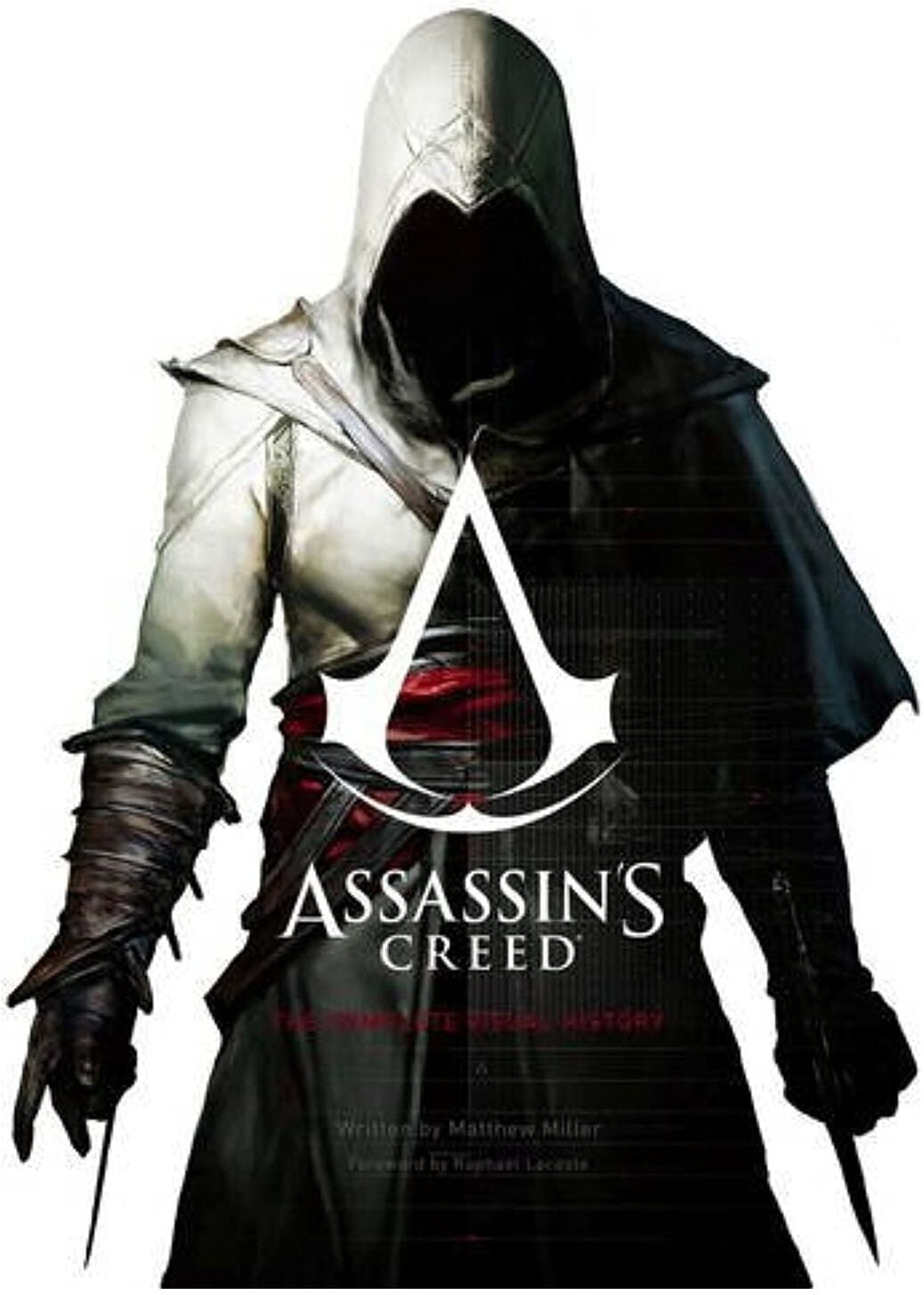
Titan Assassins Creed - The Complete Visual History: The Definitive Visual HistoryThis stunning book explores the rich mythology of Assassins Creed®, featuring the art and history of the series from the first groundbreaking game through the graphic novels to the DLCs. Highlighting the lush and vibrant art that has become a hallmark of the series, this luxury coffee-table book brings the games famous historical locations and figures to life and explores the evolution of each iconic Assassin and Templar.15,99 £*Shipping: 2,99 £Secure redirect to the provider
-
RLF Home Tradition Provance Valance"Fits Windows up to 50""W. Use multiples for Wider Windows. Decorator's quality fabrics. Fully lined with Poly/Cotton Ivory lining. Use a 2-1/2"" Continental Rod, a regular 3/4"" Curtain rod, Tension rod or Decorative pole no more than 1-3/8"" Diameter."64,49 $*Shipping: 0,00 $Secure redirect to the provider

-
Do you find the Cogito ergo sum convincing?
As an AI language model, I don't have personal beliefs or experiences, but I can provide information. The phrase "Cogito ergo sum" (I think, therefore I am) is a fundamental concept in the philosophy of René Descartes. It suggests that the act of thinking proves one's existence. Some find this argument convincing because it provides a starting point for knowledge and certainty. Others may find it unconvincing because it relies on the assumption that thinking is the only way to prove existence, and it doesn't account for non-thinking beings. Ultimately, the persuasiveness of the Cogito ergo sum depends on one's philosophical perspective. **
-
What is the history of Ego cogito ergo sum or I think, therefore I am?
The phrase "Cogito, ergo sum" or "I think, therefore I am" was famously coined by the French philosopher René Descartes in his work "Discourse on the Method" in 1637. Descartes used this statement as a foundational element in his philosophy to establish certainty in knowledge. He argued that doubt could be cast on everything except the act of doubting itself, which requires a thinking entity. This led him to conclude that the existence of a thinking self, or ego, is indubitable. The phrase has since become a fundamental concept in Western philosophy and epistemology. **
-
What is the history of Ego cogito ergo sum or Ich denke, also bin ich?
The phrase "Ego cogito, ergo sum" or "I think, therefore I am" was famously coined by the French philosopher René Descartes in his work "Discourse on the Method" in 1637. Descartes used this phrase as a foundational element in his philosophy, as he sought to establish a firm basis for knowledge. The phrase reflects Descartes' method of doubt, in which he sought to doubt everything that could be doubted in order to find a secure foundation for knowledge. The phrase has since become a central tenet in the philosophy of mind and epistemology, and has been translated into various languages, including the German "Ich denke, also bin ich." **
-
Does anyone have a good term paper topic on the Cogito argument?
One potential term paper topic on the Cogito argument could be an analysis of its implications for the nature of self and consciousness. You could explore how Descartes' assertion "I think, therefore I am" shapes our understanding of the self and its relationship to thought. Another interesting angle could be to examine criticisms of the Cogito argument and evaluate whether it truly provides a solid foundation for knowledge. Additionally, you could investigate how the Cogito argument has influenced modern philosophy and its relevance in contemporary discussions on the mind-body problem. **


Does anyone have a good term paper topic for the Cogito argument?
One potential term paper topic for the Cogito argument could be an analysis of the implications of Descartes' famous statement "I think, therefore I am" on the nature of self and consciousness. This could involve exploring the relationship between thinking and existence, as well as the implications for the mind-body problem and the nature of reality. Another potential topic could be a critical evaluation of the Cogito argument in the context of contemporary philosophy, considering objections and alternative perspectives on the nature of self-awareness and existence. Finally, a term paper could explore the historical and cultural significance of the Cogito argument, examining its impact on the development of modern philosophy and its influence on broader intellectual and cultural movements. **
What is the difference between Cogito ergo sum and Dubito ergo sum?
The phrase "Cogito ergo sum" is a Latin phrase meaning "I think, therefore I am," which was famously coined by philosopher René Descartes. This phrase represents Descartes' assertion that the act of thinking proves one's existence. On the other hand, "Dubito ergo sum" is a Latin phrase meaning "I doubt, therefore I am." This phrase is a play on Descartes' original statement, and it emphasizes the role of doubt in the process of self-awareness and existence. While "Cogito ergo sum" focuses on the act of thinking, "Dubito ergo sum" emphasizes the act of doubting as a means of affirming one's existence. **
Top-Angebote
Products related to Cogito:
-
From the Archives: Black History and Culture Value PackThis brand-new series is rooted in a profound commitment to shedding light on some of the important -- and often lesser-known -- aspects of Black history. From the Archives features landmarks, events, people, and artistic endeavors that have played...26,99 $*Shipping: 0,00 $Secure redirect to the provider
-
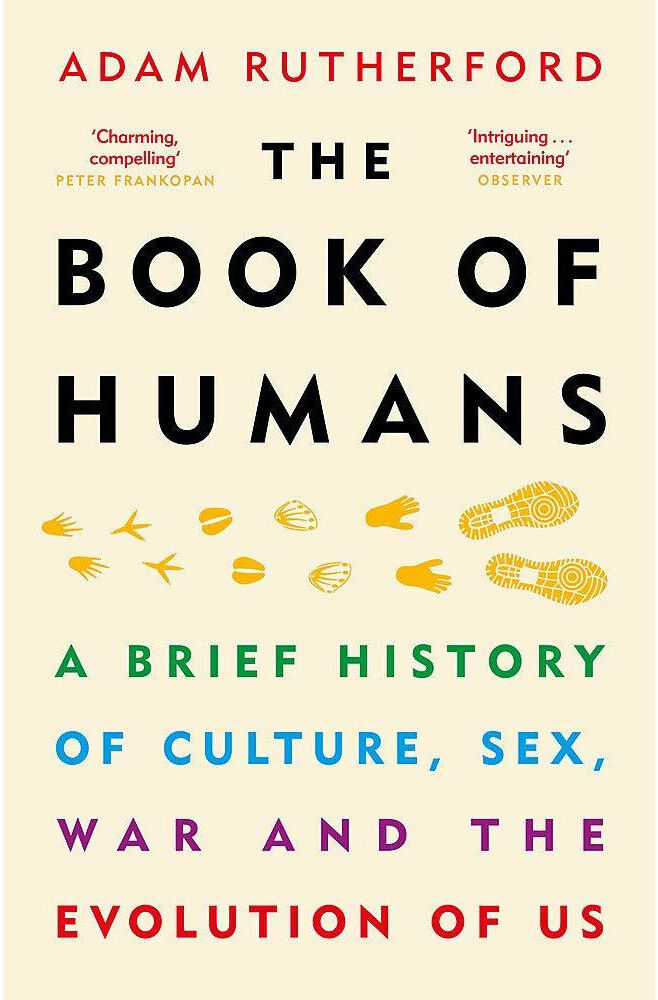
Orion The Book of Humans by Adam Rutherford – A Brief History of Culture, Sex, War & EvolutionWHAT MAKES US HUMAN? Waging war? Sex for pleasure? Creating art? Mastery of fire? In this thrilling tour of the animal kingdom, Adam Rutherford tells the story of how we became the unique creatures we are today. Illuminated by the latest scientific discoveries, THE BOOK OF HUMANS is a dazzling compendium of what unequivocally fixes us as animals, and reveals how we are extraordinary among them.4,98 £*Shipping: 1,99 £Secure redirect to the provider
-
Ancient Rome: The Definitive Visual History (DK Classic History)Immerse yourself in the history of ancient Rome - from its origins as a small settlement on the Palatine Hill to its peak as an empire reigning over 90 million people, and its tumultuous decline. Covering more than 1,000 years of history, and an empire that stretched from Scotland to Syria, Ancient Rome reveals in vivid detail all of the key political, cultural, and military events that shaped the Roman Empire and explores what it was like to live in a society that laid the foundations for many aspects of the modern world. Sumptuous photography and engaging text cover every facet of life in ancient Rome, from art, entertainment, and fashion to engineering, medicine, and war, while detailed maps trace the rise of the mighty Roman Empire. Step back in time in the pages of this history book to discover:- Themed spreads explore developments in areas such as sculpture, religion, warfare, and engineering. - Includes tales of the most dramatic events and battles in Roman history, as well as profiles of influential historical and cultural figures. - An optional 80pp reference section includes sections on rulers, gods and goddesses, and key sites. Featuring Rome's greatest emperors, from Augustus to Constantine, as well as profiles of generals, historians, and influential women, Ancient Rome also delves into the fascinating stories of gladiators, bakers, and enslaved people. The most iconic buildings of Rome are brought to life with specially commissioned CGI recreations, while the stories of ordinary citizens, soldiers, and persecuted groups from across the empire are told with the help of illustrations, artefacts, and eyewitness accounts. Beautifully illustrated and unparalleled in scope, Ancient Rome is the perfect book for anyone who is interested in this defining period of world history.19,95 £*Shipping: 2,99 £Secure redirect to the provider
-
Ancient Greece: The Definitive Visual History (DK Classic History)Embark upon a fascinating journey through ancient Greece – from its rise and fall to its lasting legacy throughout the Western world. Spanning more than 3,000 years, Ancient Greece explores the tumultuous history of this glorious empire in vivid detail – from its Minoan and Mycenaean origins to the apogee of the warring city-states of Athens and Sparta, and from the death of its most charismatic leader, Alexander the Great, to its ultimate defeat by Rome. Sumptuous photography and authoritative, engaging text cover every facet of life in ancient Greece, from art, entertainment, and schools of thought to politics, medicine, and war, while the myths and religious beliefs of the ancient culture are explored and explained in depth. Greece’s military and political power shines through in fascinating maps of its legendary battles. Buried palaces and the Athenian Agora where Plato and Socrates discussed philosophy are brought back to life with stunning CGI artworks. And the stories of everyone from ordinary citizens to lawmakers and the first Olympic athletes are retold through eyewitness accounts and original artefacts.19,99 £*Shipping: 2,99 £Secure redirect to the provider
-
What is grammatically correct: Cogito ergo sum or Ego cogito ergo sum?
The grammatically correct phrase is "Cogito ergo sum." This is the original Latin phrase coined by philosopher René Descartes, which translates to "I think, therefore I am." The phrase emphasizes the primacy of thought and self-awareness in establishing one's existence. **
-
What was Nietzsche's objection to Cogito ergo sum?
Nietzsche's objection to Cogito ergo sum, or "I think, therefore I am," stems from his belief that the self is not a fixed entity but rather a fluid and ever-changing construct. He argued that the idea of a stable and unified self, as implied by Descartes' statement, is an illusion. Nietzsche believed that the self is a product of various conflicting forces and influences, and that there is no essential core or unchanging identity to be found within it. Therefore, he rejected the notion that one's existence can be proven simply through the act of thinking. **
-
Do you find the Cogito ergo sum convincing?
As an AI language model, I don't have personal beliefs or experiences, but I can provide information. The phrase "Cogito ergo sum" (I think, therefore I am) is a fundamental concept in the philosophy of René Descartes. It suggests that the act of thinking proves one's existence. Some find this argument convincing because it provides a starting point for knowledge and certainty. Others may find it unconvincing because it relies on the assumption that thinking is the only way to prove existence, and it doesn't account for non-thinking beings. Ultimately, the persuasiveness of the Cogito ergo sum depends on one's philosophical perspective. **
-
What is the history of Ego cogito ergo sum or I think, therefore I am?
The phrase "Cogito, ergo sum" or "I think, therefore I am" was famously coined by the French philosopher René Descartes in his work "Discourse on the Method" in 1637. Descartes used this statement as a foundational element in his philosophy to establish certainty in knowledge. He argued that doubt could be cast on everything except the act of doubting itself, which requires a thinking entity. This led him to conclude that the existence of a thinking self, or ego, is indubitable. The phrase has since become a fundamental concept in Western philosophy and epistemology. **
Similar search terms for Cogito
-
Titan Assassins Creed - The Complete Visual History: The Definitive Visual HistoryThis stunning book explores the rich mythology of Assassins Creed®, featuring the art and history of the series from the first groundbreaking game through the graphic novels to the DLCs. Highlighting the lush and vibrant art that has become a hallmark of the series, this luxury coffee-table book brings the games famous historical locations and figures to life and explores the evolution of each iconic Assassin and Templar.15,99 £*Shipping: 2,99 £Secure redirect to the provider
-
RLF Home Tradition Provance Valance"Fits Windows up to 50""W. Use multiples for Wider Windows. Decorator's quality fabrics. Fully lined with Poly/Cotton Ivory lining. Use a 2-1/2"" Continental Rod, a regular 3/4"" Curtain rod, Tension rod or Decorative pole no more than 1-3/8"" Diameter."64,49 $*Shipping: 0,00 $Secure redirect to the provider
-
Uplifted Goods Optical Precision Pet Claw Architecture Optical Precision Pet Claw ArchitectureEnhance your pet grooming safety with the Optical Precision Pet Claw Architecture. This professional grade grooming solution is engineered with a specialized LED Illumination System designed to provide a definitive view of the delicate internal vein...39,97 $*Shipping: 0,00 $Secure redirect to the provider
-
Les Jardins LED path light Tradition Sensor Corten 90cm Tradition, dimmable, Brown / rust, Aluminium, Modern, outdoor solar lightsThe LED path light Tradition made of aluminum shows a modern cuboid shape and rust-brown corten steel finish. It can be operated autonomously thanks to equipment with solar module, rechargeable battery and motion sensor.- equipped with dimming function- operating time when fully charged: 5 h to 200 h (depending on light output)- protection class: IP66- alternatively rechargeable via USB connection- via ground spike (included) or permanently installable398,43 £*Shipping: 4,99 £Secure redirect to the provider
-
What is the history of Ego cogito ergo sum or Ich denke, also bin ich?
The phrase "Ego cogito, ergo sum" or "I think, therefore I am" was famously coined by the French philosopher René Descartes in his work "Discourse on the Method" in 1637. Descartes used this phrase as a foundational element in his philosophy, as he sought to establish a firm basis for knowledge. The phrase reflects Descartes' method of doubt, in which he sought to doubt everything that could be doubted in order to find a secure foundation for knowledge. The phrase has since become a central tenet in the philosophy of mind and epistemology, and has been translated into various languages, including the German "Ich denke, also bin ich." **
-
Does anyone have a good term paper topic on the Cogito argument?
One potential term paper topic on the Cogito argument could be an analysis of its implications for the nature of self and consciousness. You could explore how Descartes' assertion "I think, therefore I am" shapes our understanding of the self and its relationship to thought. Another interesting angle could be to examine criticisms of the Cogito argument and evaluate whether it truly provides a solid foundation for knowledge. Additionally, you could investigate how the Cogito argument has influenced modern philosophy and its relevance in contemporary discussions on the mind-body problem. **
-
Does anyone have a good term paper topic for the Cogito argument?
One potential term paper topic for the Cogito argument could be an analysis of the implications of Descartes' famous statement "I think, therefore I am" on the nature of self and consciousness. This could involve exploring the relationship between thinking and existence, as well as the implications for the mind-body problem and the nature of reality. Another potential topic could be a critical evaluation of the Cogito argument in the context of contemporary philosophy, considering objections and alternative perspectives on the nature of self-awareness and existence. Finally, a term paper could explore the historical and cultural significance of the Cogito argument, examining its impact on the development of modern philosophy and its influence on broader intellectual and cultural movements. **
-
What is the difference between Cogito ergo sum and Dubito ergo sum?
The phrase "Cogito ergo sum" is a Latin phrase meaning "I think, therefore I am," which was famously coined by philosopher René Descartes. This phrase represents Descartes' assertion that the act of thinking proves one's existence. On the other hand, "Dubito ergo sum" is a Latin phrase meaning "I doubt, therefore I am." This phrase is a play on Descartes' original statement, and it emphasizes the role of doubt in the process of self-awareness and existence. While "Cogito ergo sum" focuses on the act of thinking, "Dubito ergo sum" emphasizes the act of doubting as a means of affirming one's existence. **
* All prices are inclusive of VAT and, if applicable, plus shipping costs. The offer information is based on the details provided by the respective shop and is updated through automated processes. Real-time updates do not occur, so deviations can occur in individual cases. ** Note: Parts of this content were created by AI.