Buy dingelstaedt.eu ?
We are moving the project
dingelstaedt.eu .
Are you interested in purchasing the domain
dingelstaedt.eu ?
domain@kv-gmbh.de · 0541-91531010
Buy dingelstaedt.eu ?
Can complexity be objectively measured?
Complexity can be objectively measured to some extent, especially in the context of information theory and algorithmic complexity. In information theory, complexity can be measured using metrics such as entropy and Kolmogorov complexity, which provide objective measures of the amount of information or computational resources required to describe a system. However, when it comes to measuring the complexity of real-world systems or phenomena, there is often a subjective element involved, as different observers may prioritize different aspects of complexity. Therefore, while certain aspects of complexity can be objectively measured, the overall assessment of complexity may still involve some degree of subjectivity. **
What is the complexity of Mergesort?
The time complexity of Mergesort is O(n log n) in the worst-case scenario, where n is the number of elements in the array. This complexity arises from the fact that Mergesort divides the array into halves recursively and then merges them back together in sorted order. The space complexity of Mergesort is O(n) due to the need for additional space to store the divided subarrays during the sorting process. Overall, Mergesort is an efficient sorting algorithm that performs well on large datasets. **

Similar search terms for Complexity
Top-Angebote
Products related to Complexity:
-
Orion The Book of Humans by Adam Rutherford – A Brief History of Culture, Sex, War & EvolutionWHAT MAKES US HUMAN? Waging war? Sex for pleasure? Creating art? Mastery of fire? In this thrilling tour of the animal kingdom, Adam Rutherford tells the story of how we became the unique creatures we are today. Illuminated by the latest scientific discoveries, THE BOOK OF HUMANS is a dazzling compendium of what unequivocally fixes us as animals, and reveals how we are extraordinary among them.4,98 £*Shipping: 1,99 £Secure redirect to the provider
-
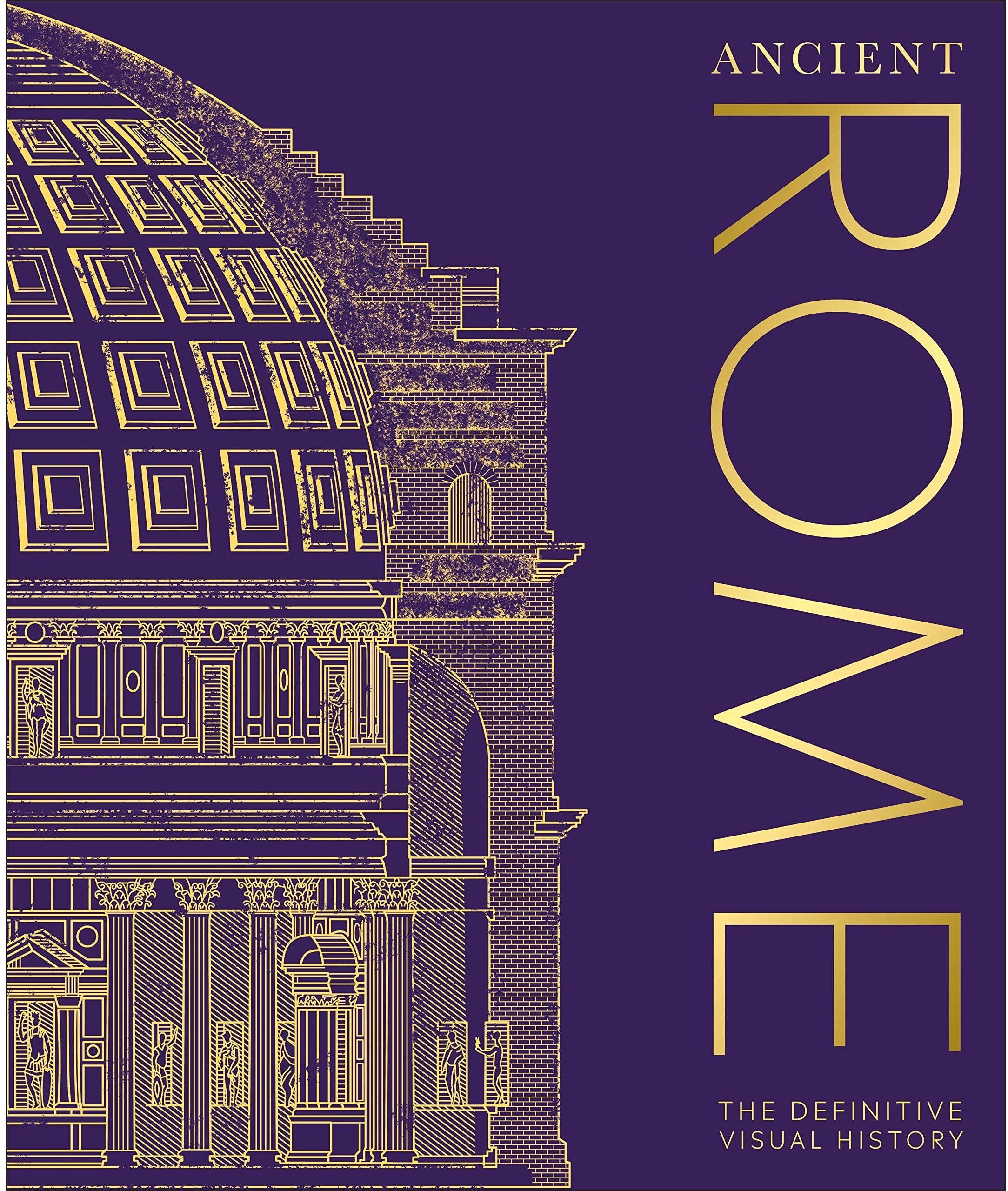
Ancient Rome: The Definitive Visual History (DK Classic History)Immerse yourself in the history of ancient Rome - from its origins as a small settlement on the Palatine Hill to its peak as an empire reigning over 90 million people, and its tumultuous decline. Covering more than 1,000 years of history, and an empire that stretched from Scotland to Syria, Ancient Rome reveals in vivid detail all of the key political, cultural, and military events that shaped the Roman Empire and explores what it was like to live in a society that laid the foundations for many aspects of the modern world. Sumptuous photography and engaging text cover every facet of life in ancient Rome, from art, entertainment, and fashion to engineering, medicine, and war, while detailed maps trace the rise of the mighty Roman Empire. Step back in time in the pages of this history book to discover:- Themed spreads explore developments in areas such as sculpture, religion, warfare, and engineering. - Includes tales of the most dramatic events and battles in Roman history, as well as profiles of influential historical and cultural figures. - An optional 80pp reference section includes sections on rulers, gods and goddesses, and key sites. Featuring Rome's greatest emperors, from Augustus to Constantine, as well as profiles of generals, historians, and influential women, Ancient Rome also delves into the fascinating stories of gladiators, bakers, and enslaved people. The most iconic buildings of Rome are brought to life with specially commissioned CGI recreations, while the stories of ordinary citizens, soldiers, and persecuted groups from across the empire are told with the help of illustrations, artefacts, and eyewitness accounts. Beautifully illustrated and unparalleled in scope, Ancient Rome is the perfect book for anyone who is interested in this defining period of world history.19,95 £*Shipping: 2,99 £Secure redirect to the provider
-
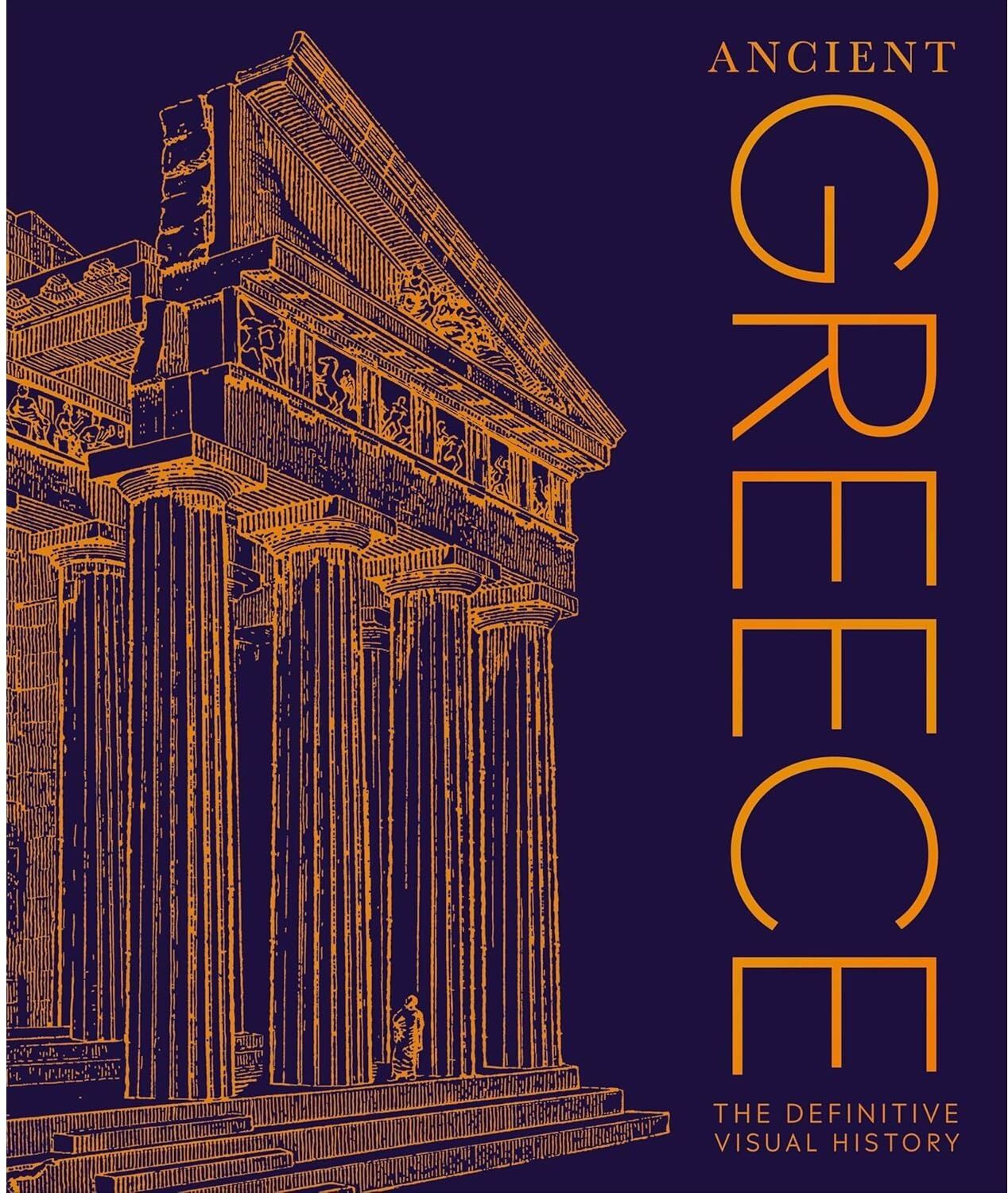
Ancient Greece: The Definitive Visual History (DK Classic History)Embark upon a fascinating journey through ancient Greece – from its rise and fall to its lasting legacy throughout the Western world. Spanning more than 3,000 years, Ancient Greece explores the tumultuous history of this glorious empire in vivid detail – from its Minoan and Mycenaean origins to the apogee of the warring city-states of Athens and Sparta, and from the death of its most charismatic leader, Alexander the Great, to its ultimate defeat by Rome. Sumptuous photography and authoritative, engaging text cover every facet of life in ancient Greece, from art, entertainment, and schools of thought to politics, medicine, and war, while the myths and religious beliefs of the ancient culture are explored and explained in depth. Greece’s military and political power shines through in fascinating maps of its legendary battles. Buried palaces and the Athenian Agora where Plato and Socrates discussed philosophy are brought back to life with stunning CGI artworks. And the stories of everyone from ordinary citizens to lawmakers and the first Olympic athletes are retold through eyewitness accounts and original artefacts.19,99 £*Shipping: 2,99 £Secure redirect to the provider
-
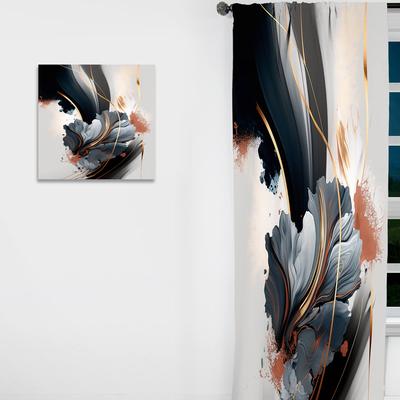
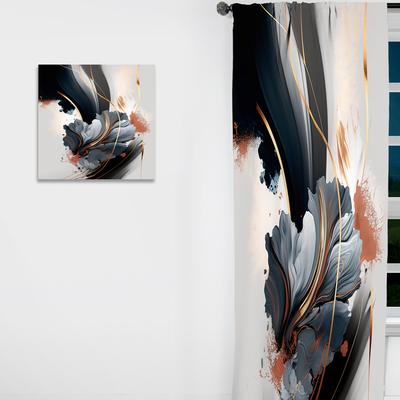
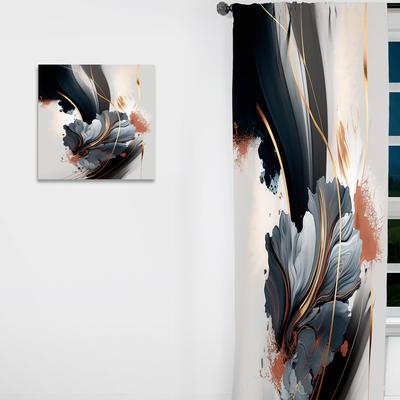
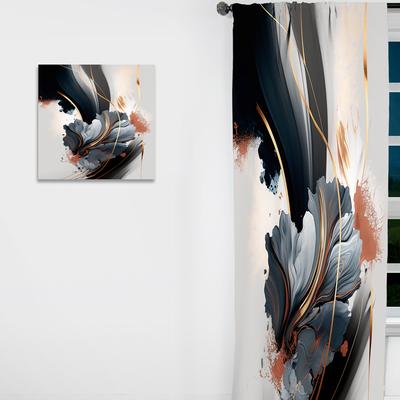
DESIGN ART "Designart ""Gold Purple Transcending Complexity II"" Abstract Curtain - Blackout Abstract Curtain - 1 Panel""Bring a breath of fresh air to your windows and spruce up any space in your home with this ""Gold Purple Transcending Complexity II"" Abstract 1 panel curtain. This beautiful Modern & Contemporary curtain is handmade on demand just for you."87,49 $*Shipping: 0,00 $Secure redirect to the provider

-
How can one get rid of complexity?
One can get rid of complexity by breaking down the problem or situation into smaller, more manageable parts. This can help to identify the root causes of the complexity and address them individually. Additionally, simplifying processes, communication, and decision-making can help reduce complexity. It is also important to prioritize and focus on the most important aspects, while letting go of unnecessary details. Finally, seeking input and collaboration from others can provide fresh perspectives and help to streamline complex situations. **
-
What is the complexity of composing two functions?
Composing two functions has a complexity of O(1), as it involves simply applying one function to the output of the other. The time complexity does not depend on the size of the input, as the functions are applied sequentially. Therefore, the complexity of composing two functions is constant and does not increase with the size of the input. **
-
What are the Big O notations for time complexity?
The Big O notations for time complexity are used to describe the upper bound on the growth rate of an algorithm's running time as the input size increases. Some common Big O notations include O(1) for constant time complexity, O(log n) for logarithmic time complexity, O(n) for linear time complexity, O(n^2) for quadratic time complexity, and O(2^n) for exponential time complexity. These notations help in analyzing and comparing the efficiency of different algorithms. **
-
What are the Landau symbols for the time complexity?
The Landau symbols for time complexity are commonly used to describe the upper and lower bounds of an algorithm's running time. The most commonly used Landau symbols for time complexity are O (big O) for upper bound, Ω (big omega) for lower bound, and Θ (big theta) for both upper and lower bounds. These symbols are used to express the growth rate of an algorithm's running time in terms of the input size. For example, if an algorithm has a time complexity of O(n^2), it means that the running time of the algorithm grows no faster than n^2 as the input size increases. **
How do you determine the complexity of a function?
The complexity of a function can be determined by analyzing its time and space requirements. This can be done by examining the number of operations the function performs and the amount of memory it uses. Additionally, the complexity can be influenced by the size of the input data and the efficiency of the algorithm used in the function. By considering these factors, one can determine the complexity of a function, which is often expressed using Big O notation. **
What does the complexity class NP mean in computer science?
In computer science, the complexity class NP (nondeterministic polynomial time) refers to a set of decision problems that can be verified in polynomial time. This means that given a potential solution to a problem, it can be efficiently checked to determine if it is correct. However, finding the solution itself may not be efficient, as it may require trying all possible solutions. NP problems are often associated with the concept of nondeterministic Turing machines, which can guess the correct solution and then verify it in polynomial time. The question of whether NP problems can be solved in polynomial time is one of the most important open problems in computer science, known as the P vs. NP problem. **
Top-Angebote
Products related to Complexity:
-
DESIGN ART "Designart ""Gold Purple Transcending Complexity II"" Abstract Curtain - Blackout Abstract Curtain - 1 Panel""Bring a breath of fresh air to your windows and spruce up any space in your home with this ""Gold Purple Transcending Complexity II"" Abstract 1 panel curtain. This beautiful Modern & Contemporary curtain is handmade on demand just for you."75,99 $*Shipping: 0,00 $Secure redirect to the provider
-
From the Archives: Black History and Culture Value PackThis brand-new series is rooted in a profound commitment to shedding light on some of the important -- and often lesser-known -- aspects of Black history. From the Archives features landmarks, events, people, and artistic endeavors that have played...26,99 $*Shipping: 0,00 $Secure redirect to the provider
-
Orion The Book of Humans by Adam Rutherford – A Brief History of Culture, Sex, War & EvolutionWHAT MAKES US HUMAN? Waging war? Sex for pleasure? Creating art? Mastery of fire? In this thrilling tour of the animal kingdom, Adam Rutherford tells the story of how we became the unique creatures we are today. Illuminated by the latest scientific discoveries, THE BOOK OF HUMANS is a dazzling compendium of what unequivocally fixes us as animals, and reveals how we are extraordinary among them.4,98 £*Shipping: 1,99 £Secure redirect to the provider
-
Ancient Rome: The Definitive Visual History (DK Classic History)Immerse yourself in the history of ancient Rome - from its origins as a small settlement on the Palatine Hill to its peak as an empire reigning over 90 million people, and its tumultuous decline. Covering more than 1,000 years of history, and an empire that stretched from Scotland to Syria, Ancient Rome reveals in vivid detail all of the key political, cultural, and military events that shaped the Roman Empire and explores what it was like to live in a society that laid the foundations for many aspects of the modern world. Sumptuous photography and engaging text cover every facet of life in ancient Rome, from art, entertainment, and fashion to engineering, medicine, and war, while detailed maps trace the rise of the mighty Roman Empire. Step back in time in the pages of this history book to discover:- Themed spreads explore developments in areas such as sculpture, religion, warfare, and engineering. - Includes tales of the most dramatic events and battles in Roman history, as well as profiles of influential historical and cultural figures. - An optional 80pp reference section includes sections on rulers, gods and goddesses, and key sites. Featuring Rome's greatest emperors, from Augustus to Constantine, as well as profiles of generals, historians, and influential women, Ancient Rome also delves into the fascinating stories of gladiators, bakers, and enslaved people. The most iconic buildings of Rome are brought to life with specially commissioned CGI recreations, while the stories of ordinary citizens, soldiers, and persecuted groups from across the empire are told with the help of illustrations, artefacts, and eyewitness accounts. Beautifully illustrated and unparalleled in scope, Ancient Rome is the perfect book for anyone who is interested in this defining period of world history.19,95 £*Shipping: 2,99 £Secure redirect to the provider
-
Can complexity be objectively measured?
Complexity can be objectively measured to some extent, especially in the context of information theory and algorithmic complexity. In information theory, complexity can be measured using metrics such as entropy and Kolmogorov complexity, which provide objective measures of the amount of information or computational resources required to describe a system. However, when it comes to measuring the complexity of real-world systems or phenomena, there is often a subjective element involved, as different observers may prioritize different aspects of complexity. Therefore, while certain aspects of complexity can be objectively measured, the overall assessment of complexity may still involve some degree of subjectivity. **
-
What is the complexity of Mergesort?
The time complexity of Mergesort is O(n log n) in the worst-case scenario, where n is the number of elements in the array. This complexity arises from the fact that Mergesort divides the array into halves recursively and then merges them back together in sorted order. The space complexity of Mergesort is O(n) due to the need for additional space to store the divided subarrays during the sorting process. Overall, Mergesort is an efficient sorting algorithm that performs well on large datasets. **
-
How can one get rid of complexity?
One can get rid of complexity by breaking down the problem or situation into smaller, more manageable parts. This can help to identify the root causes of the complexity and address them individually. Additionally, simplifying processes, communication, and decision-making can help reduce complexity. It is also important to prioritize and focus on the most important aspects, while letting go of unnecessary details. Finally, seeking input and collaboration from others can provide fresh perspectives and help to streamline complex situations. **
-
What is the complexity of composing two functions?
Composing two functions has a complexity of O(1), as it involves simply applying one function to the output of the other. The time complexity does not depend on the size of the input, as the functions are applied sequentially. Therefore, the complexity of composing two functions is constant and does not increase with the size of the input. **
Similar search terms for Complexity
-
Ancient Greece: The Definitive Visual History (DK Classic History)Embark upon a fascinating journey through ancient Greece – from its rise and fall to its lasting legacy throughout the Western world. Spanning more than 3,000 years, Ancient Greece explores the tumultuous history of this glorious empire in vivid detail – from its Minoan and Mycenaean origins to the apogee of the warring city-states of Athens and Sparta, and from the death of its most charismatic leader, Alexander the Great, to its ultimate defeat by Rome. Sumptuous photography and authoritative, engaging text cover every facet of life in ancient Greece, from art, entertainment, and schools of thought to politics, medicine, and war, while the myths and religious beliefs of the ancient culture are explored and explained in depth. Greece’s military and political power shines through in fascinating maps of its legendary battles. Buried palaces and the Athenian Agora where Plato and Socrates discussed philosophy are brought back to life with stunning CGI artworks. And the stories of everyone from ordinary citizens to lawmakers and the first Olympic athletes are retold through eyewitness accounts and original artefacts.19,99 £*Shipping: 2,99 £Secure redirect to the provider
-
DESIGN ART "Designart ""Gold Purple Transcending Complexity II"" Abstract Curtain - Blackout Abstract Curtain - 1 Panel""Bring a breath of fresh air to your windows and spruce up any space in your home with this ""Gold Purple Transcending Complexity II"" Abstract 1 panel curtain. This beautiful Modern & Contemporary curtain is handmade on demand just for you."87,49 $*Shipping: 0,00 $Secure redirect to the provider
-
DESIGN ART "Designart ""Gold Purple Transcending Complexity II"" Abstract Curtain - Blackout Abstract Curtain - 1 Panel""Bring a breath of fresh air to your windows and spruce up any space in your home with this ""Gold Purple Transcending Complexity II"" Abstract 1 panel curtain. This beautiful Modern & Contemporary curtain is handmade on demand just for you."92,99 $*Shipping: 0,00 $Secure redirect to the provider
-
DESIGN ART "Designart ""Gold Purple Transcending Complexity II"" Abstract Curtain - Blackout Abstract Curtain - 1 Panel""Bring a breath of fresh air to your windows and spruce up any space in your home with this ""Gold Purple Transcending Complexity II"" Abstract 1 panel curtain. This beautiful Modern & Contemporary curtain is handmade on demand just for you."95,49 $*Shipping: 0,00 $Secure redirect to the provider
-
What are the Big O notations for time complexity?
The Big O notations for time complexity are used to describe the upper bound on the growth rate of an algorithm's running time as the input size increases. Some common Big O notations include O(1) for constant time complexity, O(log n) for logarithmic time complexity, O(n) for linear time complexity, O(n^2) for quadratic time complexity, and O(2^n) for exponential time complexity. These notations help in analyzing and comparing the efficiency of different algorithms. **
-
What are the Landau symbols for the time complexity?
The Landau symbols for time complexity are commonly used to describe the upper and lower bounds of an algorithm's running time. The most commonly used Landau symbols for time complexity are O (big O) for upper bound, Ω (big omega) for lower bound, and Θ (big theta) for both upper and lower bounds. These symbols are used to express the growth rate of an algorithm's running time in terms of the input size. For example, if an algorithm has a time complexity of O(n^2), it means that the running time of the algorithm grows no faster than n^2 as the input size increases. **
-
How do you determine the complexity of a function?
The complexity of a function can be determined by analyzing its time and space requirements. This can be done by examining the number of operations the function performs and the amount of memory it uses. Additionally, the complexity can be influenced by the size of the input data and the efficiency of the algorithm used in the function. By considering these factors, one can determine the complexity of a function, which is often expressed using Big O notation. **
-
What does the complexity class NP mean in computer science?
In computer science, the complexity class NP (nondeterministic polynomial time) refers to a set of decision problems that can be verified in polynomial time. This means that given a potential solution to a problem, it can be efficiently checked to determine if it is correct. However, finding the solution itself may not be efficient, as it may require trying all possible solutions. NP problems are often associated with the concept of nondeterministic Turing machines, which can guess the correct solution and then verify it in polynomial time. The question of whether NP problems can be solved in polynomial time is one of the most important open problems in computer science, known as the P vs. NP problem. **
* All prices are inclusive of VAT and, if applicable, plus shipping costs. The offer information is based on the details provided by the respective shop and is updated through automated processes. Real-time updates do not occur, so deviations can occur in individual cases. ** Note: Parts of this content were created by AI.