Buy dingelstaedt.eu ?
We are moving the project
dingelstaedt.eu .
Are you interested in purchasing the domain
dingelstaedt.eu ?
domain@kv-gmbh.de · 0541-91531010
Buy dingelstaedt.eu ?
What is the grandfather paradox and what is the father paradox?
The grandfather paradox is a theoretical scenario in time travel where a person travels back in time and inadvertently prevents their grandparents from meeting, thus preventing the person's own birth. This creates a paradox because if the person was never born, they could not have traveled back in time to prevent their grandparents from meeting in the first place. The father paradox is a similar concept where a time traveler goes back in time and prevents their own father from meeting their mother, thus preventing their own birth. This paradox also raises questions about the possibility of altering one's own existence through time travel and the resulting contradictions that arise. Both paradoxes highlight the complexities and logical inconsistencies that can arise in theories of time travel. **
Is Christianity a paradox?
Christianity can be seen as a paradox in some ways. For example, the belief in a loving God who allows suffering and evil in the world can be seen as contradictory. Additionally, the idea of salvation through faith alone while also emphasizing the importance of good works can be viewed as paradoxical. However, many Christians believe that these apparent contradictions can be reconciled through faith and understanding of God's plan. Ultimately, whether Christianity is considered a paradox may depend on individual interpretation and perspective. **
Similar search terms for Paradox
Top-Angebote
Products related to Paradox:
-
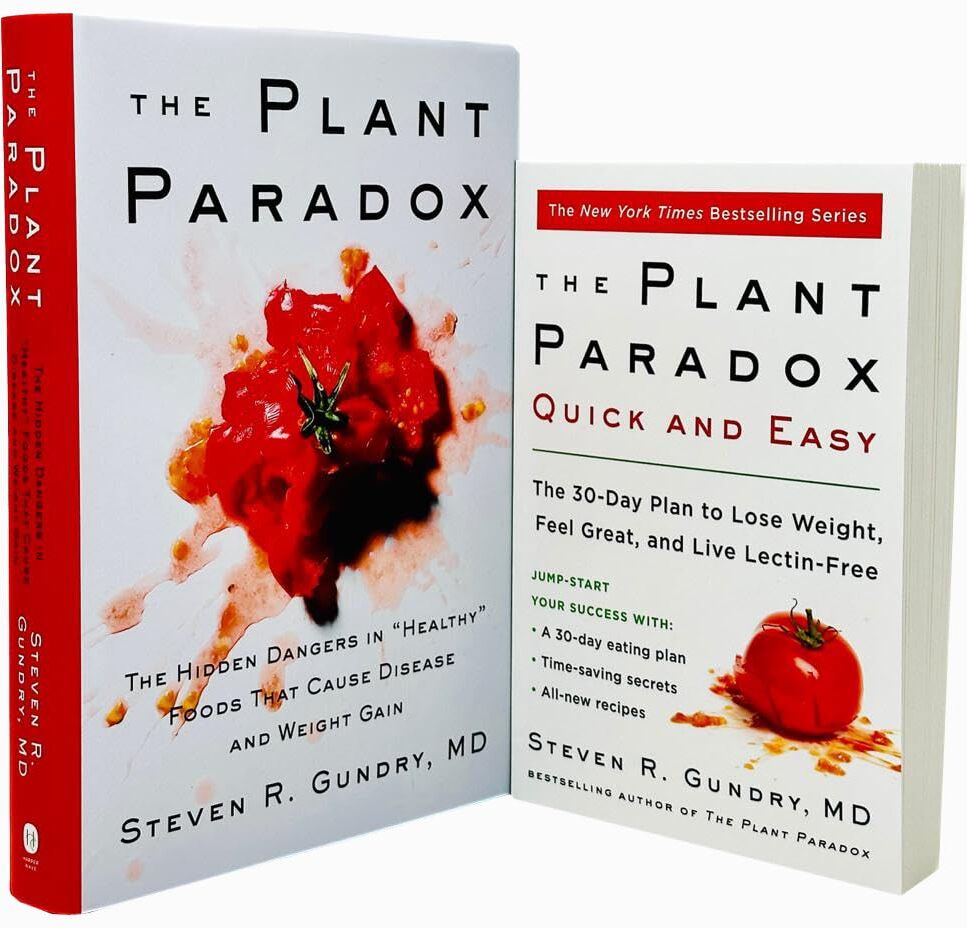
Harper The Plant Paradox & The Plant Paradox Quick and Easy 2 Book Collection Set by Steven R. Gundry – 30-Day Diet Plan & Health GuideThe Plant Paradox Series 2 Books Collection Set By Dr. Steven R Gundry MD (The Plant Paradox [Hardcover] & The Plant Paradox Quick and Easy: The 30-Day Plan to Lose Weight, Feel Great, and Live Lectin-Free): The Plant Paradox [Hardcover]: In The Plant Paradox, renowned cardiologist Dr. Steven Gundry reveals that gluten is just one variety of a common, and highly toxic, plant-based protein called lectin. Lectins are found not only in grains like wheat but also in the “gluten-free” foods most of us commonly regard as healthy, including many fruits, vegetables, nuts, beans, and conventional dairy products. These proteins, which are found in the seeds, grains, skins, rinds, and leaves of plants, are designed by nature to protect them from predators (including humans). Once ingested, they incite a kind of chemical warfare in our bodies, causing inflammatory reactions that can lead to weight gain and serious health conditions. The Plant Paradox Quick and Easy: In Dr. Steven Gundry’s breakout bestseller The Plant Paradox, readers learned the surprising truth about foods that have long been regarded as healthy. Lectins—a type of protein found in fruits, vegetables, legumes, dairy, and grains—wreak havoc on the gut, creating systemic inflammation and laying the groundwork for disease and weight gain. Avoiding lectins offers incredible health benefits but requires a significant lifestyle change—one that, for many people, can feel overwhelming.Now, in The Plant Paradox Quick and Easy, Dr. Gundry makes it simpler than ever to go lectin free. His 30-day challenge offers incentives, support, and results along with a toolkit for success.12,99 £*Shipping: 2,99 £Secure redirect to the provider
-
Is it a paradox?
A paradox is a statement or situation that seems contradictory or absurd but may be true in reality. To determine if something is a paradox, we need to examine if it presents a logical inconsistency or a conflict between different elements. If the statement or situation involves conflicting ideas that cannot both be true, then it can be considered a paradox. **
-
Is atheism a paradox?
Atheism is not inherently a paradox. Atheism is simply the lack of belief in a deity or deities, and it is a valid philosophical position held by many individuals. While some may argue that the existence of atheism is paradoxical in a world where religion is prevalent, it is important to recognize that atheism is a legitimate worldview that is based on rationality, skepticism, and critical thinking. It is not contradictory for individuals to reject the existence of a deity or deities based on their own reasoning and evidence. **
-
Is this a paradox?
Without knowing the specific statement or situation in question, it is difficult to determine if it is a paradox. A paradox is a statement or situation that seems self-contradictory or illogical, but upon closer examination may reveal a deeper truth. If you provide the specific statement or situation, I would be happy to help determine if it is a paradox. **
-
What is a paradox?
A paradox is a statement or situation that seems to contradict itself, but upon closer examination, may actually contain some truth or validity. It is a concept that challenges our understanding of logic and reason, often leading to a sense of confusion or ambiguity. Paradoxes can be found in various fields such as philosophy, literature, and science, and they often provoke deep contemplation and thought. **
What is the Christian paradox?
The Christian paradox refers to the idea that in order to gain one's life, they must first lose it. This concept is based on the teachings of Jesus in the Bible, where he emphasizes the importance of selflessness, humility, and sacrifice. It highlights the idea that true fulfillment and purpose in life come from serving others and putting their needs above our own. The Christian paradox challenges individuals to go against the norms of society that prioritize self-interest and instead embrace a life of love, compassion, and service to others. **
What is the Raven Paradox?
The Raven Paradox is a thought experiment that challenges our understanding of inductive reasoning. It was formulated by the philosopher Carl Gustav Hempel in 1945. The paradox arises from the observation that confirming instances (e.g. seeing a black raven) do not necessarily provide evidence for a general hypothesis (e.g. all ravens are black). This challenges the traditional view that confirming instances increase the probability of a hypothesis being true. The paradox highlights the complexities of inductive reasoning and the limitations of drawing general conclusions from specific observations. **
Top-Angebote
Products related to Paradox:
-
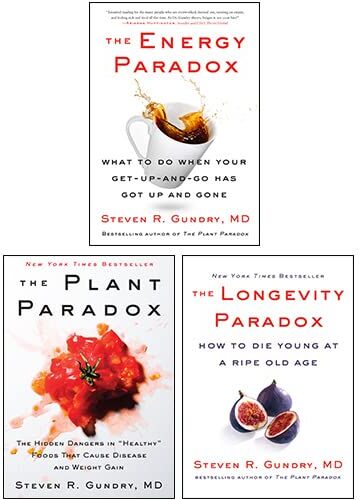
Harper Dr. Steven R Gundry MD 3 Books Collection Set (The Plant Paradox, The Longevity Paradox & The Energy Paradox)Dr. Steven R Gundry MD 3 Books Collection Set (The Plant Paradox, The Longevity Paradox & The Energy Paradox): The Plant Paradox: In The Plant Paradox, renowned cardiologist Dr. Steven Gundry reveals that gluten is just one variety of a common, and highly toxic, plant-based protein called lectin. Lectins are found not only in grains like wheat but also in the “gluten-free” foods most of us commonly regard as healthy, including many fruits, vegetables, nuts, beans, and conventional dairy products. These proteins, which are found in the seeds, grains, skins, rinds, and leaves of plants, are designed by nature to protect them from predators (including humans). The Longevity Paradox: This groundbreaking book holds the answer. Working with thousands of patients, Dr. Gundry has discovered that the “diseases of aging” we most fear are not simply a function of age; rather, they are a byproduct of the way we have lived over the decades. In The Longevity Paradox, he maps out a new approach to aging well—one that is based on supporting the health of the “oldest” parts of us: the microorganisms that live within our bodies. The Energy Paradox: In The Energy Paradox, Dr. Gundry expands upon his previous discussions of gut, microbiome, and mitochondrial health, linking immune malfunction to the mental and physical symptoms of fatigue—including exhaustion, brain fog, depression, anxiety, and low metabolism. As Dr. Gundry explains, feeling tired, moody, and zapped of energy is not normal, no matter your workload or age. Fatigue is an SOS flare from the body, one that is intended to alert us that something is wrong.18,99 £*Shipping: 2,99 £Secure redirect to the provider
-
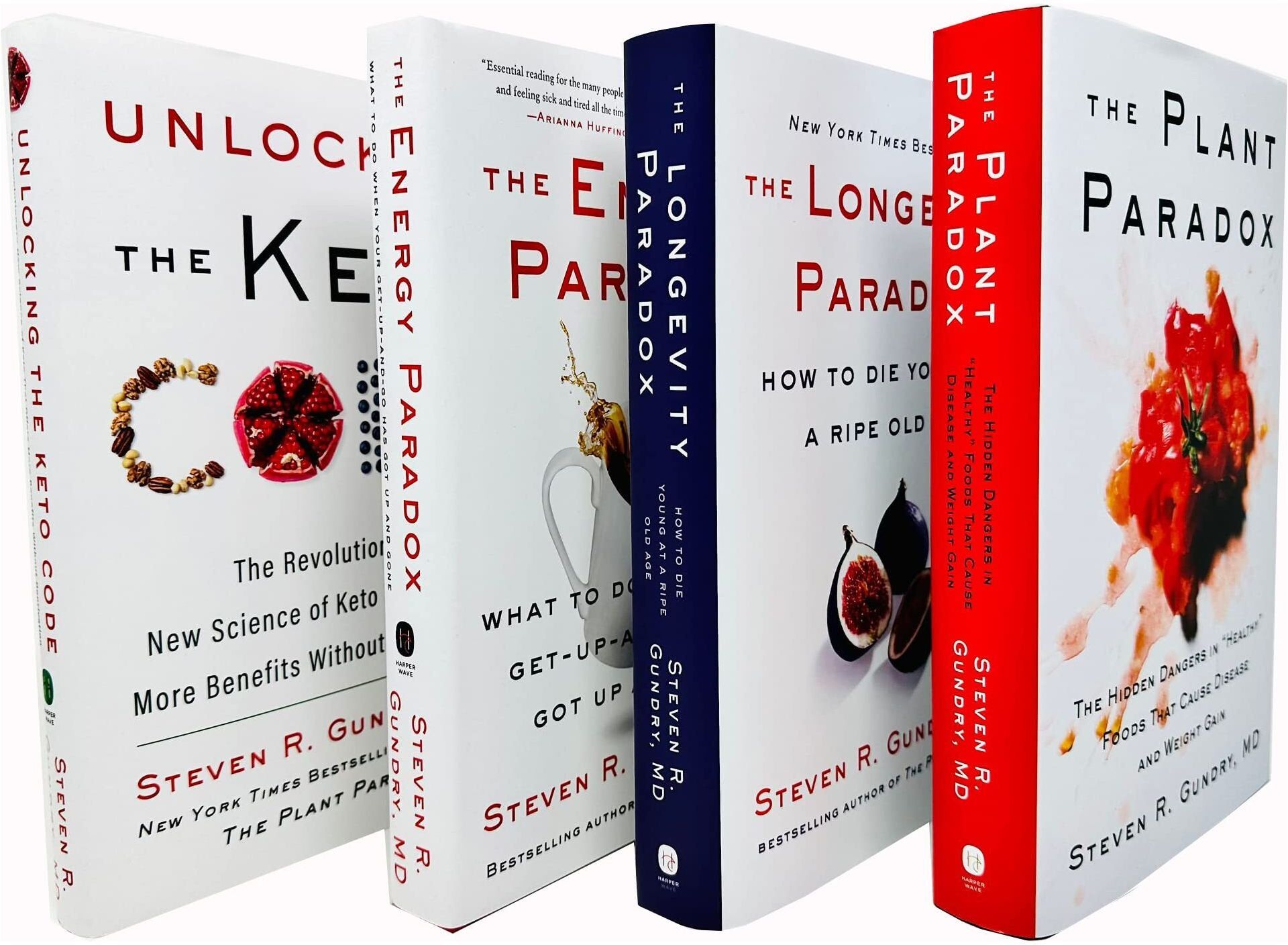
HarperWave ltd Dr. Steven R Gundry MD 4 Books Collection Set (The Plant Paradox, The Longevity Paradox, The Energy Paradox and Unlocking The Keto Code)Dr. Steven R Gundry MD 4 Books Collection Set (The Plant Paradox, The Longevity Paradox, The Energy Paradox & Unlocking The Keto Code): The Plant Paradox: In The Plant Paradox, renowned cardiologist Dr. Steven Gundry reveals that gluten is just one variety of a common, and highly toxic, plant-based protein called lectin. Lectins are found not only in grains like wheat but also in the “gluten-free” foods most of us commonly regard as healthy, including many fruits, vegetables, nuts, beans, and conventional dairy products. The Longevity Paradox: This groundbreaking book holds the answer. Working with thousands of patients, Dr. Gundry has discovered that the “diseases of aging” we most fear are not simply a function of age; rather, they are a byproduct of the way we have lived over the decades. In The Longevity Paradox, he maps out a new approach to aging well—one that is based on supporting the health of the “oldest” parts of us: the microorganisms that live within our bodies. The Energy Paradox: In The Energy Paradox, Dr. Gundry expands upon his previous discussions of gut, microbiome, and mitochondrial health, linking immune malfunction to the mental and physical symptoms of fatigue—including exhaustion, brain fog, depression, anxiety, and low metabolism. As Dr. Gundry explains, feeling tired, moody, and zapped of energy is not normal, no matter your workload or age. Unlocking the Keto Code: In Unlocking the Keto Code, Dr. Gundry reveals the biological mechanism that makes keto diets so successful: a cellular process known as “mitochondrial uncoupling.” As it turns out, ketones are not the magical fuel source they’ve been made out to be; in fact, the body cannot run on ketones and fats alone.24,90 £*Shipping: 2,99 £Secure redirect to the provider
-
Harper The Plant Paradox & The Plant Paradox Quick and Easy 2 Book Collection Set by Steven R. Gundry – 30-Day Diet Plan & Health GuideThe Plant Paradox Series 2 Books Collection Set By Dr. Steven R Gundry MD (The Plant Paradox [Hardcover] & The Plant Paradox Quick and Easy: The 30-Day Plan to Lose Weight, Feel Great, and Live Lectin-Free): The Plant Paradox [Hardcover]: In The Plant Paradox, renowned cardiologist Dr. Steven Gundry reveals that gluten is just one variety of a common, and highly toxic, plant-based protein called lectin. Lectins are found not only in grains like wheat but also in the “gluten-free” foods most of us commonly regard as healthy, including many fruits, vegetables, nuts, beans, and conventional dairy products. These proteins, which are found in the seeds, grains, skins, rinds, and leaves of plants, are designed by nature to protect them from predators (including humans). Once ingested, they incite a kind of chemical warfare in our bodies, causing inflammatory reactions that can lead to weight gain and serious health conditions. The Plant Paradox Quick and Easy: In Dr. Steven Gundry’s breakout bestseller The Plant Paradox, readers learned the surprising truth about foods that have long been regarded as healthy. Lectins—a type of protein found in fruits, vegetables, legumes, dairy, and grains—wreak havoc on the gut, creating systemic inflammation and laying the groundwork for disease and weight gain. Avoiding lectins offers incredible health benefits but requires a significant lifestyle change—one that, for many people, can feel overwhelming.Now, in The Plant Paradox Quick and Easy, Dr. Gundry makes it simpler than ever to go lectin free. His 30-day challenge offers incentives, support, and results along with a toolkit for success.12,99 £*Shipping: 2,99 £Secure redirect to the provider
-
What is the grandfather paradox and what is the father paradox?
The grandfather paradox is a theoretical scenario in time travel where a person travels back in time and inadvertently prevents their grandparents from meeting, thus preventing the person's own birth. This creates a paradox because if the person was never born, they could not have traveled back in time to prevent their grandparents from meeting in the first place. The father paradox is a similar concept where a time traveler goes back in time and prevents their own father from meeting their mother, thus preventing their own birth. This paradox also raises questions about the possibility of altering one's own existence through time travel and the resulting contradictions that arise. Both paradoxes highlight the complexities and logical inconsistencies that can arise in theories of time travel. **
-
Is Christianity a paradox?
Christianity can be seen as a paradox in some ways. For example, the belief in a loving God who allows suffering and evil in the world can be seen as contradictory. Additionally, the idea of salvation through faith alone while also emphasizing the importance of good works can be viewed as paradoxical. However, many Christians believe that these apparent contradictions can be reconciled through faith and understanding of God's plan. Ultimately, whether Christianity is considered a paradox may depend on individual interpretation and perspective. **
-
Is it a paradox?
A paradox is a statement or situation that seems contradictory or absurd but may be true in reality. To determine if something is a paradox, we need to examine if it presents a logical inconsistency or a conflict between different elements. If the statement or situation involves conflicting ideas that cannot both be true, then it can be considered a paradox. **
-
Is atheism a paradox?
Atheism is not inherently a paradox. Atheism is simply the lack of belief in a deity or deities, and it is a valid philosophical position held by many individuals. While some may argue that the existence of atheism is paradoxical in a world where religion is prevalent, it is important to recognize that atheism is a legitimate worldview that is based on rationality, skepticism, and critical thinking. It is not contradictory for individuals to reject the existence of a deity or deities based on their own reasoning and evidence. **
Similar search terms for Paradox
-
Is this a paradox?
Without knowing the specific statement or situation in question, it is difficult to determine if it is a paradox. A paradox is a statement or situation that seems self-contradictory or illogical, but upon closer examination may reveal a deeper truth. If you provide the specific statement or situation, I would be happy to help determine if it is a paradox. **
-
What is a paradox?
A paradox is a statement or situation that seems to contradict itself, but upon closer examination, may actually contain some truth or validity. It is a concept that challenges our understanding of logic and reason, often leading to a sense of confusion or ambiguity. Paradoxes can be found in various fields such as philosophy, literature, and science, and they often provoke deep contemplation and thought. **
-
What is the Christian paradox?
The Christian paradox refers to the idea that in order to gain one's life, they must first lose it. This concept is based on the teachings of Jesus in the Bible, where he emphasizes the importance of selflessness, humility, and sacrifice. It highlights the idea that true fulfillment and purpose in life come from serving others and putting their needs above our own. The Christian paradox challenges individuals to go against the norms of society that prioritize self-interest and instead embrace a life of love, compassion, and service to others. **
-
What is the Raven Paradox?
The Raven Paradox is a thought experiment that challenges our understanding of inductive reasoning. It was formulated by the philosopher Carl Gustav Hempel in 1945. The paradox arises from the observation that confirming instances (e.g. seeing a black raven) do not necessarily provide evidence for a general hypothesis (e.g. all ravens are black). This challenges the traditional view that confirming instances increase the probability of a hypothesis being true. The paradox highlights the complexities of inductive reasoning and the limitations of drawing general conclusions from specific observations. **
* All prices are inclusive of VAT and, if applicable, plus shipping costs. The offer information is based on the details provided by the respective shop and is updated through automated processes. Real-time updates do not occur, so deviations can occur in individual cases. ** Note: Parts of this content were created by AI.