Buy dingelstaedt.eu ?
We are moving the project
dingelstaedt.eu .
Are you interested in purchasing the domain
dingelstaedt.eu ?
domain@kv-gmbh.de · 0541-91531010
Buy dingelstaedt.eu ?
How do you calculate resistances?
To calculate resistance in a circuit, you can use Ohm's law, which states that resistance (R) is equal to the voltage (V) across the circuit divided by the current (I) flowing through it. So, the formula for calculating resistance is R = V/I. You can also use the formula R = ρ * (L/A), where ρ is the resistivity of the material, L is the length of the conductor, and A is the cross-sectional area of the conductor. By using these formulas and the given values of voltage, current, resistivity, length, and area, you can calculate the resistance in a circuit. **
How do you calculate equivalent resistances?
To calculate equivalent resistances in a series circuit, you simply add up the resistances of each component. In a parallel circuit, you use the formula 1/Req = 1/R1 + 1/R2 + 1/R3 + ..., where Req is the equivalent resistance and R1, R2, R3, etc. are the individual resistances. For more complex circuits, you can use a combination of series and parallel rules to simplify the circuit and find the equivalent resistance. **


Similar search terms for Resistances
Top-Angebote
Products related to Resistances:
-
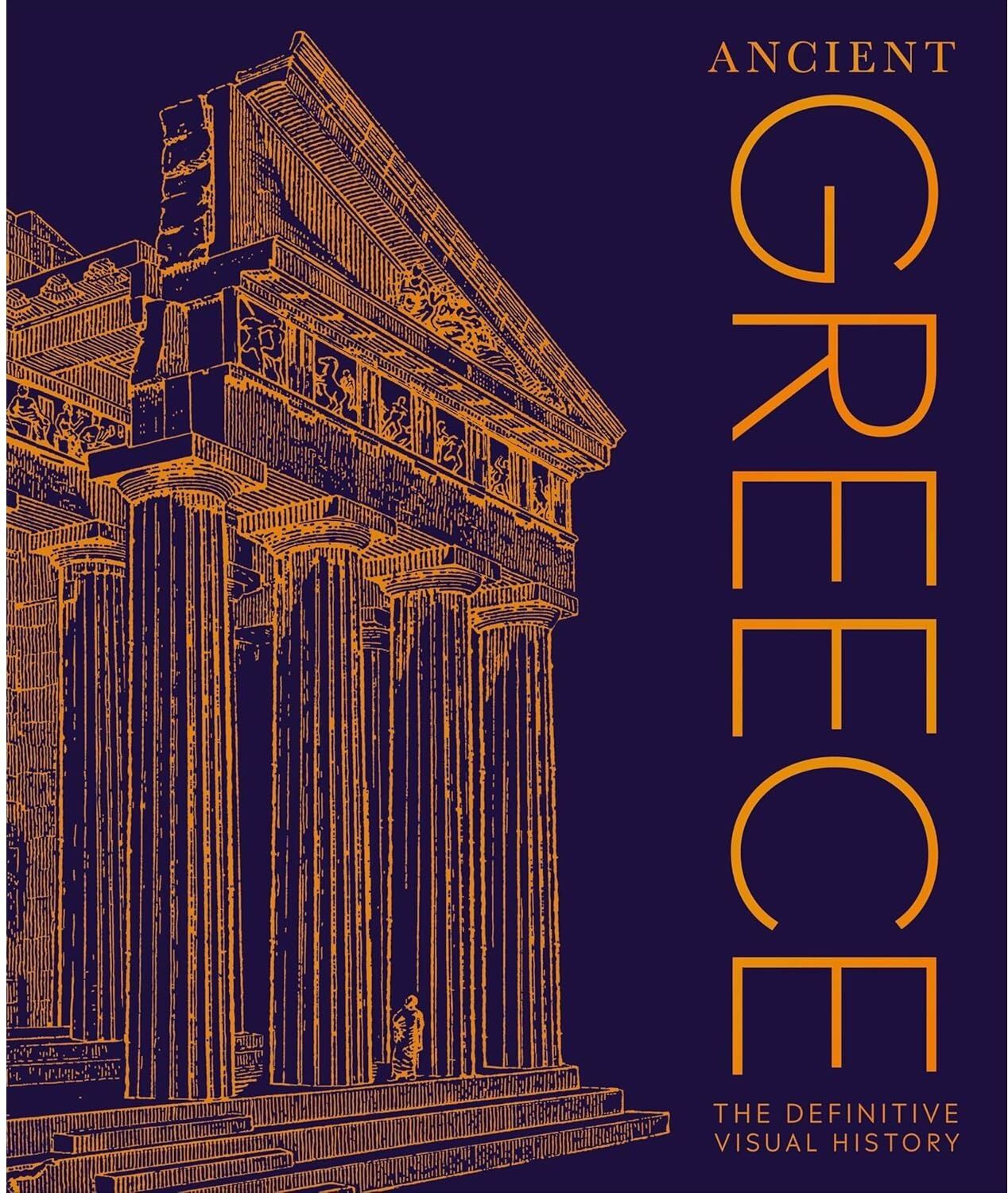
Ancient Greece: The Definitive Visual History (DK Classic History)Embark upon a fascinating journey through ancient Greece – from its rise and fall to its lasting legacy throughout the Western world. Spanning more than 3,000 years, Ancient Greece explores the tumultuous history of this glorious empire in vivid detail – from its Minoan and Mycenaean origins to the apogee of the warring city-states of Athens and Sparta, and from the death of its most charismatic leader, Alexander the Great, to its ultimate defeat by Rome. Sumptuous photography and authoritative, engaging text cover every facet of life in ancient Greece, from art, entertainment, and schools of thought to politics, medicine, and war, while the myths and religious beliefs of the ancient culture are explored and explained in depth. Greece’s military and political power shines through in fascinating maps of its legendary battles. Buried palaces and the Athenian Agora where Plato and Socrates discussed philosophy are brought back to life with stunning CGI artworks. And the stories of everyone from ordinary citizens to lawmakers and the first Olympic athletes are retold through eyewitness accounts and original artefacts.19,99 £*Shipping: 2,99 £Secure redirect to the provider
-
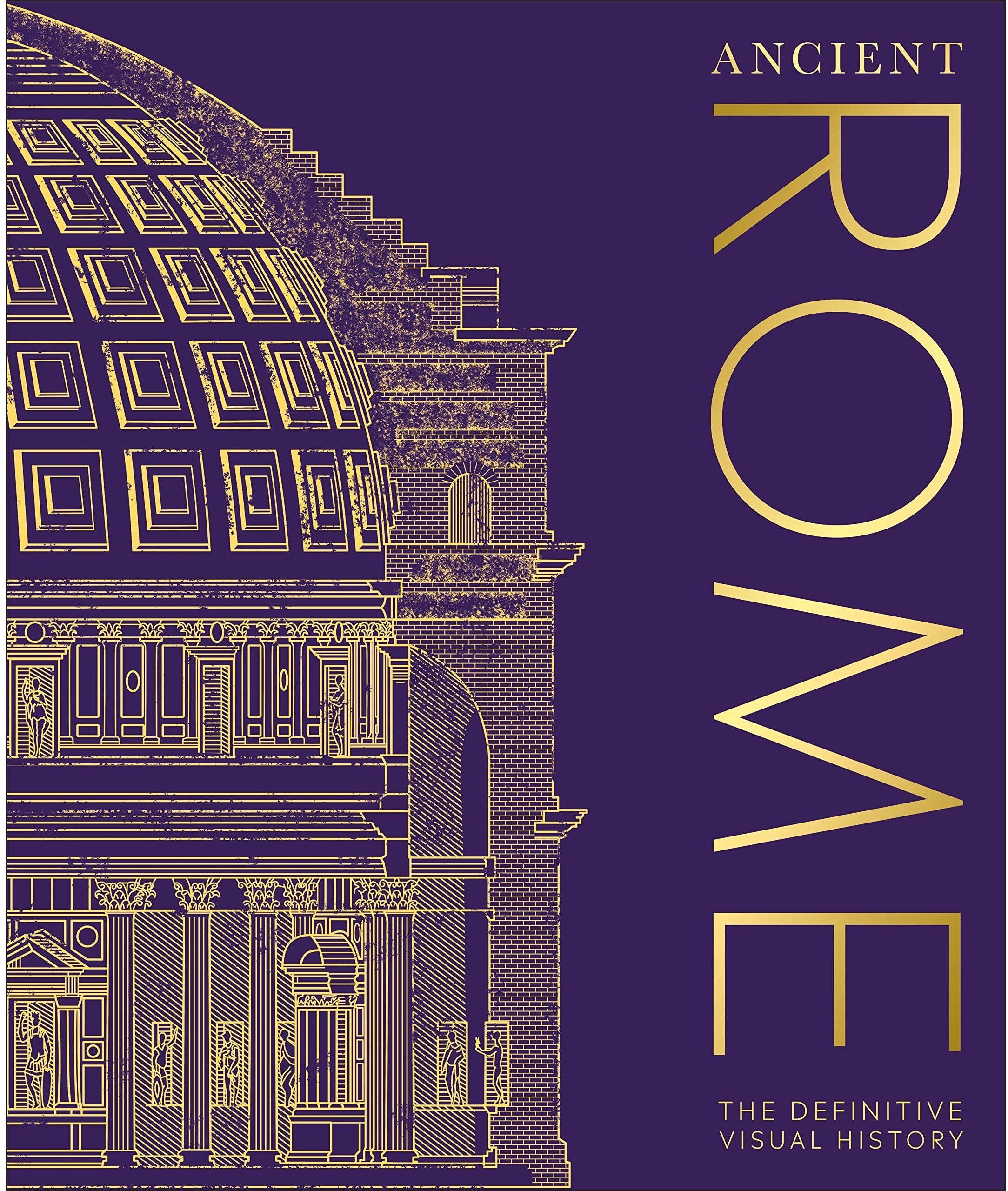
Ancient Rome: The Definitive Visual History (DK Classic History)Immerse yourself in the history of ancient Rome - from its origins as a small settlement on the Palatine Hill to its peak as an empire reigning over 90 million people, and its tumultuous decline. Covering more than 1,000 years of history, and an empire that stretched from Scotland to Syria, Ancient Rome reveals in vivid detail all of the key political, cultural, and military events that shaped the Roman Empire and explores what it was like to live in a society that laid the foundations for many aspects of the modern world. Sumptuous photography and engaging text cover every facet of life in ancient Rome, from art, entertainment, and fashion to engineering, medicine, and war, while detailed maps trace the rise of the mighty Roman Empire. Step back in time in the pages of this history book to discover:- Themed spreads explore developments in areas such as sculpture, religion, warfare, and engineering. - Includes tales of the most dramatic events and battles in Roman history, as well as profiles of influential historical and cultural figures. - An optional 80pp reference section includes sections on rulers, gods and goddesses, and key sites. Featuring Rome's greatest emperors, from Augustus to Constantine, as well as profiles of generals, historians, and influential women, Ancient Rome also delves into the fascinating stories of gladiators, bakers, and enslaved people. The most iconic buildings of Rome are brought to life with specially commissioned CGI recreations, while the stories of ordinary citizens, soldiers, and persecuted groups from across the empire are told with the help of illustrations, artefacts, and eyewitness accounts. Beautifully illustrated and unparalleled in scope, Ancient Rome is the perfect book for anyone who is interested in this defining period of world history.19,95 £*Shipping: 2,99 £Secure redirect to the provider
-
RLF Home Tradition Provance Valance"Fits Windows up to 50""W. Use multiples for Wider Windows. Decorator's quality fabrics. Fully lined with Poly/Cotton Ivory lining. Use a 2-1/2"" Continental Rod, a regular 3/4"" Curtain rod, Tension rod or Decorative pole no more than 1-3/8"" Diameter."64,49 $*Shipping: 0,00 $Secure redirect to the provider
-
Les Jardins LED path light Tradition Sensor Corten 90cm Tradition, dimmable, Brown / rust, Aluminium, Modern, outdoor solar lightsThe LED path light Tradition made of aluminum shows a modern cuboid shape and rust-brown corten steel finish. It can be operated autonomously thanks to equipment with solar module, rechargeable battery and motion sensor.- equipped with dimming function- operating time when fully charged: 5 h to 200 h (depending on light output)- protection class: IP66- alternatively rechargeable via USB connection- via ground spike (included) or permanently installable398,43 £*Shipping: 4,99 £Secure redirect to the provider


-
Can caffeine resistances be reduced again?
Yes, caffeine resistances can be reduced again by gradually decreasing caffeine intake over time. This can help the body readjust to lower levels of caffeine and become less dependent on it. Additionally, incorporating healthy lifestyle habits such as getting enough sleep, staying hydrated, and managing stress can also help reduce caffeine resistances. It is important to consult with a healthcare professional before making any significant changes to caffeine consumption. **
-
How do you calculate the total resistances?
To calculate the total resistance in a series circuit, you simply add up all the individual resistances. In a parallel circuit, you use the formula 1/Rtotal = 1/R1 + 1/R2 + 1/R3 + ... where R1, R2, R3, etc. are the individual resistances. Once you have calculated the total resistance, you can use Ohm's Law (V = IR) to determine the current flowing through the circuit. **
-
What are the resistances in different circuits?
In different circuits, resistances can be found in various forms. In a series circuit, the total resistance is the sum of individual resistances. In a parallel circuit, the total resistance is less than the smallest individual resistance. Additionally, resistors can be used to intentionally limit the flow of current in a circuit. Overall, resistances in different circuits serve to control the flow of current and voltage, and can be used to achieve specific electrical characteristics in a circuit. **
-
What are forces and resistances in physics?
Forces in physics are interactions that cause an object to accelerate, change direction, or deform. They can be classified as contact forces, such as friction and tension, or as field forces, such as gravity and electromagnetic forces. Resistances, on the other hand, are forces that oppose the motion of an object. These can include air resistance, friction, and drag. In physics, understanding forces and resistances is crucial for analyzing the motion and behavior of objects in various situations. **


How high are the resistances in watts?
The resistance in watts depends on the specific circuit or component in question. Resistance is typically measured in ohms, not watts. However, the power dissipated by a resistor, which is measured in watts, can be calculated using the formula P = I^2 * R, where P is power in watts, I is current in amperes, and R is resistance in ohms. So, the resistance itself is not measured in watts, but the power dissipated by the resistance can be calculated in watts. **
What resistances do the heating coils have?
The heating coils have electrical resistance, which is the opposition to the flow of electric current. This resistance causes the coils to heat up as the current passes through them, allowing them to generate heat. The resistance of the heating coils can be measured in ohms, and it determines how much heat the coils can produce at a given voltage. **
Top-Angebote
Products related to Resistances:
-
From the Archives: Black History and Culture Value PackThis brand-new series is rooted in a profound commitment to shedding light on some of the important -- and often lesser-known -- aspects of Black history. From the Archives features landmarks, events, people, and artistic endeavors that have played...26,99 $*Shipping: 0,00 $Secure redirect to the provider
-
Orion The Book of Humans by Adam Rutherford – A Brief History of Culture, Sex, War & EvolutionWHAT MAKES US HUMAN? Waging war? Sex for pleasure? Creating art? Mastery of fire? In this thrilling tour of the animal kingdom, Adam Rutherford tells the story of how we became the unique creatures we are today. Illuminated by the latest scientific discoveries, THE BOOK OF HUMANS is a dazzling compendium of what unequivocally fixes us as animals, and reveals how we are extraordinary among them.4,98 £*Shipping: 1,99 £Secure redirect to the provider
-
Ancient Greece: The Definitive Visual History (DK Classic History)Embark upon a fascinating journey through ancient Greece – from its rise and fall to its lasting legacy throughout the Western world. Spanning more than 3,000 years, Ancient Greece explores the tumultuous history of this glorious empire in vivid detail – from its Minoan and Mycenaean origins to the apogee of the warring city-states of Athens and Sparta, and from the death of its most charismatic leader, Alexander the Great, to its ultimate defeat by Rome. Sumptuous photography and authoritative, engaging text cover every facet of life in ancient Greece, from art, entertainment, and schools of thought to politics, medicine, and war, while the myths and religious beliefs of the ancient culture are explored and explained in depth. Greece’s military and political power shines through in fascinating maps of its legendary battles. Buried palaces and the Athenian Agora where Plato and Socrates discussed philosophy are brought back to life with stunning CGI artworks. And the stories of everyone from ordinary citizens to lawmakers and the first Olympic athletes are retold through eyewitness accounts and original artefacts.19,99 £*Shipping: 2,99 £Secure redirect to the provider
-
Ancient Rome: The Definitive Visual History (DK Classic History)Immerse yourself in the history of ancient Rome - from its origins as a small settlement on the Palatine Hill to its peak as an empire reigning over 90 million people, and its tumultuous decline. Covering more than 1,000 years of history, and an empire that stretched from Scotland to Syria, Ancient Rome reveals in vivid detail all of the key political, cultural, and military events that shaped the Roman Empire and explores what it was like to live in a society that laid the foundations for many aspects of the modern world. Sumptuous photography and engaging text cover every facet of life in ancient Rome, from art, entertainment, and fashion to engineering, medicine, and war, while detailed maps trace the rise of the mighty Roman Empire. Step back in time in the pages of this history book to discover:- Themed spreads explore developments in areas such as sculpture, religion, warfare, and engineering. - Includes tales of the most dramatic events and battles in Roman history, as well as profiles of influential historical and cultural figures. - An optional 80pp reference section includes sections on rulers, gods and goddesses, and key sites. Featuring Rome's greatest emperors, from Augustus to Constantine, as well as profiles of generals, historians, and influential women, Ancient Rome also delves into the fascinating stories of gladiators, bakers, and enslaved people. The most iconic buildings of Rome are brought to life with specially commissioned CGI recreations, while the stories of ordinary citizens, soldiers, and persecuted groups from across the empire are told with the help of illustrations, artefacts, and eyewitness accounts. Beautifully illustrated and unparalleled in scope, Ancient Rome is the perfect book for anyone who is interested in this defining period of world history.19,95 £*Shipping: 2,99 £Secure redirect to the provider
-
How do you calculate resistances?
To calculate resistance in a circuit, you can use Ohm's law, which states that resistance (R) is equal to the voltage (V) across the circuit divided by the current (I) flowing through it. So, the formula for calculating resistance is R = V/I. You can also use the formula R = ρ * (L/A), where ρ is the resistivity of the material, L is the length of the conductor, and A is the cross-sectional area of the conductor. By using these formulas and the given values of voltage, current, resistivity, length, and area, you can calculate the resistance in a circuit. **
-
How do you calculate equivalent resistances?
To calculate equivalent resistances in a series circuit, you simply add up the resistances of each component. In a parallel circuit, you use the formula 1/Req = 1/R1 + 1/R2 + 1/R3 + ..., where Req is the equivalent resistance and R1, R2, R3, etc. are the individual resistances. For more complex circuits, you can use a combination of series and parallel rules to simplify the circuit and find the equivalent resistance. **
-
Can caffeine resistances be reduced again?
Yes, caffeine resistances can be reduced again by gradually decreasing caffeine intake over time. This can help the body readjust to lower levels of caffeine and become less dependent on it. Additionally, incorporating healthy lifestyle habits such as getting enough sleep, staying hydrated, and managing stress can also help reduce caffeine resistances. It is important to consult with a healthcare professional before making any significant changes to caffeine consumption. **
-
How do you calculate the total resistances?
To calculate the total resistance in a series circuit, you simply add up all the individual resistances. In a parallel circuit, you use the formula 1/Rtotal = 1/R1 + 1/R2 + 1/R3 + ... where R1, R2, R3, etc. are the individual resistances. Once you have calculated the total resistance, you can use Ohm's Law (V = IR) to determine the current flowing through the circuit. **
Similar search terms for Resistances
-
RLF Home Tradition Provance Valance"Fits Windows up to 50""W. Use multiples for Wider Windows. Decorator's quality fabrics. Fully lined with Poly/Cotton Ivory lining. Use a 2-1/2"" Continental Rod, a regular 3/4"" Curtain rod, Tension rod or Decorative pole no more than 1-3/8"" Diameter."64,49 $*Shipping: 0,00 $Secure redirect to the provider
-
Les Jardins LED path light Tradition Sensor Corten 90cm Tradition, dimmable, Brown / rust, Aluminium, Modern, outdoor solar lightsThe LED path light Tradition made of aluminum shows a modern cuboid shape and rust-brown corten steel finish. It can be operated autonomously thanks to equipment with solar module, rechargeable battery and motion sensor.- equipped with dimming function- operating time when fully charged: 5 h to 200 h (depending on light output)- protection class: IP66- alternatively rechargeable via USB connection- via ground spike (included) or permanently installable398,43 £*Shipping: 4,99 £Secure redirect to the provider
-
Uplifted Goods Optical Precision Pet Claw Architecture Optical Precision Pet Claw ArchitectureEnhance your pet grooming safety with the Optical Precision Pet Claw Architecture. This professional grade grooming solution is engineered with a specialized LED Illumination System designed to provide a definitive view of the delicate internal vein...39,97 $*Shipping: 0,00 $Secure redirect to the provider
-
What are the resistances in different circuits?
In different circuits, resistances can be found in various forms. In a series circuit, the total resistance is the sum of individual resistances. In a parallel circuit, the total resistance is less than the smallest individual resistance. Additionally, resistors can be used to intentionally limit the flow of current in a circuit. Overall, resistances in different circuits serve to control the flow of current and voltage, and can be used to achieve specific electrical characteristics in a circuit. **
-
What are forces and resistances in physics?
Forces in physics are interactions that cause an object to accelerate, change direction, or deform. They can be classified as contact forces, such as friction and tension, or as field forces, such as gravity and electromagnetic forces. Resistances, on the other hand, are forces that oppose the motion of an object. These can include air resistance, friction, and drag. In physics, understanding forces and resistances is crucial for analyzing the motion and behavior of objects in various situations. **
-
How high are the resistances in watts?
The resistance in watts depends on the specific circuit or component in question. Resistance is typically measured in ohms, not watts. However, the power dissipated by a resistor, which is measured in watts, can be calculated using the formula P = I^2 * R, where P is power in watts, I is current in amperes, and R is resistance in ohms. So, the resistance itself is not measured in watts, but the power dissipated by the resistance can be calculated in watts. **
-
What resistances do the heating coils have?
The heating coils have electrical resistance, which is the opposition to the flow of electric current. This resistance causes the coils to heat up as the current passes through them, allowing them to generate heat. The resistance of the heating coils can be measured in ohms, and it determines how much heat the coils can produce at a given voltage. **
* All prices are inclusive of VAT and, if applicable, plus shipping costs. The offer information is based on the details provided by the respective shop and is updated through automated processes. Real-time updates do not occur, so deviations can occur in individual cases. ** Note: Parts of this content were created by AI.